Sunday, December 9, 2018

Two "Off-the-boat" stories

I have been brought to tears twice in the past two days by stories of immigrants newly arrived in America. But these are not the oft-published stories of grand injustices like the tearing apart of families or the withholding of housing, jobs, or rights in court. 
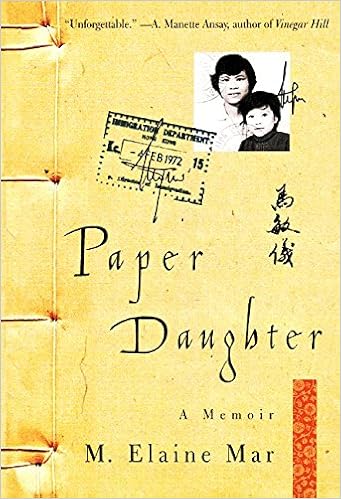
Image result for m elaine mar paper daughter
The first comes from Paper Daughter, by M. Elaine Mar. Five-year-old Yee arrives in Denver with her mother, following after her father who departed from China years before. Nixon is in office, we learn for a sense of timing, and Yee joins an all-white first grade classroom. 

The trials of school are almost incommunicable but Mar poignantly and impressively details the difficulty of answering a question in math class: 


Mrs. Tate wrote the equation in big chalk figures on the board. She asked for a volunteer. The more enthusiastic students raised their hands. Mrs. Tate scanned the room, then decided, "Let's give Elaine a chance." I didn't understand a word, not even my new name. There was silence. "Elaine?" Mrs. Tate repeated. I ddin't respond. "That's your name," San reminded me. My classmates started giggling. "Oh," I said. I immediately knew the answer, but I couldn't think of the word for "seven" in English. "Um," I said. The children laughed some more.

Mrs. Tate made a shushing sound, one finger in front of her lips. She drew tally marks next to the numbers. "Now, here we have one, two, three," she said. "And here we have one, two three, four. If we put them together, how many do we have?" She looked at me significantly.

I still couldn't think of the word. I wanted to ask San, but I wasn't allowed - Mrs. Tate would think I was cheating. I'll write it on the board, I thought. I slid out of my seat.

Misunderstanding my action, Mrs. Tate said, "No, no, you can't go to the bathrom now." The class exploded with laughter. San translated the sentence for me. "I want to write the answer," I told him. 

Too late. Mrs. Tate decided to solve the problem herself: "All together class, one, two, three --" she tapped at the lines she'd drawn "--four, five, six, seven. The answer's seven!"


As I read this I think of students who don't respond right away when their names are called - students who have read the text and probably have understood, but who can't speak their words. This is why I so rarely cold call. But I am afraid that I must often not give students enough time to respond to a question that just takes them time to translate in their heads, then translate back into English. 

This isn't the scene that made me cry - that was the scene when the whole class submits forms and money to buy school-logo tee-shirts which Elaine's family cannot afford. Her shame, instead of her lack of English, prevent her from being clear about why she can't submit the form on time. This kind of shame must be the experience of so many kids, immigrant and not. 
“You may have ‘The Lives of the Poets’ under your oxter, but you don’t have them in your head, so go home and read.”
The other immigrant story is this excerpt from 'Tis: A Memoir by Frank McCourt. The excerpt appeared in the New Yorker in 1999 and has been reprinted this week. At first I thought it was just going to be an enjoyable and light read. But the final scene, which is indeed funny, and describes his mishaps in a New York movie theater a few days after he's arrived from Ireland, is also very sad. The pain of having an expectation of how you will enjoy simple pleasures, and having that expectation so utterly smashed, is hard to read about. OK I didn't actually cry, but I felt like crying, and certainly had I been in his shoes I think I would have cried.

Saturday, December 1, 2018

Reflection of one culture in another

This morning I started reading a memoir called Paper Daughter by M. Elaine Mar. This is not the first account by a Chinese of her upbringing in China which has enthralled me from the first sentence. Amy Tan's The Joy Luck Club cast a similar trance with stories of an unabashedly autocratic parenting system which teaches young girls to be obedient, helpful, demure and feminine.

I love the contrast between the parents' stifling tactics and the child's natural impulses, or the ways the child misconstrues some of the parents' carefully conveyed messages, as when the narrator's mother tells her that her grandmother doesn't have to follow the same rules as everyone else only because she's old and has earned privileges.

"Oh yes," the mother says solemnly, "You must respect your elders." The young girl does respect her grandmother immensely, but only because she's allowed to go about without combing her hair. The girl hates her daily appointment with her mother's comb, and longs for such freedom from tyranny to be her right.

Or when the child understands things the parents never attempted to teach, lessons learned through experience and observation. For example, Ms. Mar learns from watching her mother and their female neighbor give each other false compliments to fulfil a social expectation of flattery alongside self-deprecation. Her mother coos at the young child of their neighbor, and the neighbor says

"'Isn't auntie kind! Oh see how much she likes you!'
Moy-moy, who was two, tottered off to fetch her chamberpot for me, prompting laughter from the two mothers. 'See how much she likes you, little Yee?' they asked. Perched on the rim of Moy-moy's toilet, I began to understand the meaning of subservience, a proxy for affection in our culture."

There are aspects of Ms. Mar's childhood which recall significant moments of my own. She recalls that her mother told her the story of The Boy Who Cried Wolf every single day. I remember the first time my mother told me that story, and how profoundly that message hit home. The narrator of Paper Daughter says that she shivered when the boy died at the end, eaten by the wolf because of his own foolishness. I think my version was the sanitized American translation, in which only the lives of a few hapless sheep are sacrificed to the moral of the story. But the effect was strong. I think my mother told me that story only once, and she did not follow it with the narrator's mother's daily commentary: "You must never lie."

Yesterday, our second day on Beowulf in the 11/12 classroom, students wrote at the beginning of class about what people in their culture tend to talk about when they get together. The natural division that arose in first period and was maintained in the rest of the day was the generational gap - they students wanted to divide the conversation topics into what Older people talk about, and what Younger people talk about. After they discussed with their partners, we took feedback as a class, which resulted in these lists.


Then, we read the opening segments of Beowulf, translated by Seamus Heaney. Our question was, what do these people seem to care about? What do they talk about? Several of the same things came up - leaders, how to be "good," how to achieve power and wealth, former struggles, community problems.

I need to find a way to post our conversation topics in the class, so we can keep an eye to what these people are talking about that we also talk about.


Friday, November 30, 2018

Doing things by hand

This morning I am procrastinating while in my own classroom - a rare occurrence, I assure you - as I read from some of my preferred periodicals, before students roam and rouse the halls. 

THe task I am putting off is glueing bits of text to larger pieces of paper that students can annotate on. My reading brought me to two articles about the virtues of doing things by hand, or making work original. Both articles subtly point me towards my work...

The first is about quick replies to emails that gmail now supplies. "Sounds great!" "I'm in!" "Tuesday works for me." I detest these suggestions and even if I would have said what was written, I adjust my wording on principle. It takes us another step away from writing letters, which I cling to as a source of personal fulfillment. 

The other is about making things with your hands, or craftsmanship. Yesterday an English teaching colleague and I test-drove a reading skills test that we have to administer to all our students next week. It's terrible, in part because it's on the computer, which seems like such an unnatural way to read if any pleasure will be gained. (It feels infinitely different from a kindle. Somehow, I don't want to be able to click on and interact with the reading page - I just want to read it.)

So here's to a day of creating hands-on tasks for students, and a weekend of writing, by hand, Christmas greetings on cards that Tess and I stamped and painted ourselves!

Thursday, November 22, 2018

Felix Culpa!


My choir is singing Ceremony of Carols, by Benjamin Britten, and in returning to this piece for the first time since I was singing with Southern Maine Children's Choir at the age of 9, I am struck by the lyrics to the penultimate movement, Deo Gracias. 


Adam lay ibounden, bounden in a bond;
For thousand winter, thought he not too long.
Deo gracias! Deo gracias!
And all was for an appil, and appeil that he tok,
As clerkès finden weitten in their book.
Deo gracias! Deo gracias!
Ne had the appil takè ben, the appil takè ben,
Ne haddè never our lady, a ben hevenè quene.
Blessèd be the time that appil takè was.
Therefore we moun singen.
Deo gracias! Deo gracias!
I have learned through a little research that the language here, whimsical as it seems to me, is Maraconic, a mix of Latin and English (makes me think of a musical version of Yankee Doodle: "stick a feather in your English and call it Macaronic!"). As we sang these words probably a dozen times at rehearsal on Saturday, I realized we were saying "Blessed be the time that appil take was." What? Are we praising the fall of man here? This was the first I had heard of Eve's acquisition as anything other than evidence that women are the root of all evil. 
Apparently, St. Ambrose, St. Augustine and Thomas Aquinas are way ahead of me. Ambrose, of the 4th century, was the first to introduce the idea that this original sin was good because it summoned so great a redeemer as Christ. Aquinas wrote, "But there is no reason why human nature should not have been raised to something greater after sin. For God allows evils to happen in order to bring a greater good therefrom." 
What an interesting idea, that we might be raised to higher heights after sinning. I think I'm going to bring this up in class this next text, while we read Beowulf, who, arguably, commits the sin of hubris. 
Anyway, this phenomenon speaks of a pendulum effect in our own moral comportment.

Saturday, November 17, 2018

Black Mamba Boy, by Nadifa Mohamed

Image result for black mamba boy cover This morning I finished Black Mamba Boy, and am in awe of its geographic reach. A boy born in Yemen who embarks on a journey to find his father after his mother dies. One of the remarkable things about his journey, which starts in 1935, is that anywhere he goes he gives the name of his clan and thus finds people who will take him in, give him work, or at the very least point the way to his next destination. Without the clan network he would certainly never have survived past the first few legs of his journey. 

The book has a map on the inside cover which shows the Arabian peninsula over into northern Europe, divided into the territories and countries that existed in the thirties. I had to refer to it many times, and am also in awe of the vastness and cultural patchwork that characterize those desert regions. 

The hardest part of the book to read, but also the most compelling, related to the British and Italian colonial forces in northern Africa at this time - their brutality, their cultural bulldozing, their unrelenting and heavy handed racism. It was tragic to read the young boy's growing self-consciousness of himself as the lowest of the low because he was dark skinned and poor. His treatment at the hands of white soldiers and superiors shames me. 

Image result for tears we cannot stop cover This week I listened to Tears We Cannot Stop: A Sermon to White America. by Michael Eric Dyson, in which he describes briefly his own disillusionment with blackness as he grew up. In the community where he was a boy, he writes, "blackness surrounded me like warm molasses"; as he grew up and encountered more and more of the white narrative about what black people are and where they fit in the hierarchy of life, his own skin color dimmed and that warm  molasses effect turned to something decidedly less sweet and rich. 

It never ceases to amaze me how the different things I read converse with each other in my mind. Dyson's account of his own internalization of black-as-bad followed shortly on the heals of my class's analysis of how Othello begins, in acts 3 and 4, to internalize what Iago says about him, namely that his wife made a mistake in marrying him, that his skin color renders their marriage unnatural, and that his status as a foreigner means that his wife is bound to fall out of love with him. I believe much of Othello's madness is driven not by jealousy, but by a nascent self-hatred that he doesn't know what to do with, so unleashes it on the obvious target, which is Desdemona. The class didn't go that far, but we did talk about how he says 

"Her name, which was as fresh
As Dian's visage, is not begrimed and black
As mine own face."

We spent a good amount of time talking about how for the first time here, Othello uses the word black to refer to something dirty and ruined, (Desdemona's name or reputation) and his own face. 


Related imageOn Thursday one class referred to the idea of Monsters again (which is the theme of this unit) and one student said that Othello is not a monster because of the actions he takes - he is a monster because of what he has undergone at the hands of Iago. It was Iago's treatment of him that makes him a monster, and his violent lashings out (slapping his wife - at this point we hadn't seen act five and the murder and suicide) were the reaction of the monster to his treatment. I thought this was incredibly insightful, and we connected to another girl's reference to a black man on the U's campus who had shot his girlfriend, then himself, a few weeks ago. Maybe, we ventured, he had heard too much of what the white people said about him, and couldn't take it once he had internalized it.

The Fire Next Time is my favorite book, and this week I had what felt like a watershed moment as a teacher, as I assigned an excerpt from it to my students. We read Baldwin's opening letter to his nephew, in which he tells the boy that his grandfather "had a terrible life. He was destroyed long before he died because, at the bottom of his heart, he really believed what the white people said about him." Many, many students annotated and commented on this line when they read it, and connected it to what seems to be going on with Othello, along with the line later in the paragraph, which reads "You can only really be destroyed if you believe what the white world says about you."

Image result for the fire next time coverThe very next morning, as I was listening to the Dyson audiobook, Dyson referred to exactly that line! He relayed a story at the end of which he reflected, "and I began to understand what James Baldwin meant when he said 'You can only really be destroyed if you believe what the white world says about you.'"

I cannot tell you how gratifying this was. I declared aloud to my living room "I had them read that!" I kind of hope that I get to keep giving them snippets of Baldwin and Malcolm X this year, alongside our readings. I want them to be bathed in the warm molasses of the magnificence of black literary voices.

Saturday, October 13, 2018

Laudate Othello!

I just told a friend that this is one of the best weekends of my year. It is the weekend of the fall choir concert. The life-changing piece on this season's program? Tres Cantus Laudendi (Three Songs of Praise) by Mack Wilburg. 

Image result for salt lake choral artists let all the world sing posterOK there was a long, tearful interlude right there while I went to listen to the full performance of the piece, which is available in practice files on our chorus's website, but here's a youtube video of the first movement in performance. I just can't believe what an experience it is to sing in a choir of 100 people, accompanied by 8 or 10 brass players. I can't even hold it together. Pardon me with the Tribune's review says all was well except the insufferable second alto who couldn't keep from swaying and bobbing this moment, then crumpling into emotional tears at other moments. Thank goodness for dress rehearsals when the first wave of the impact of combined choir and orchestra can be undergone without an audience. 
The dress rehearsal is indeed my favorite night of the year (which is why Holy week was so great last week, with what was essentially a dress rehearsal for the St. Matthew Passion every night) because without an audience I feel less nervous and inhibited. I also love hearing the brass rehearse, stop, try something again, get better. The rehearsal process (and watching Brady be exacting with all the other musicians as well) is so satisfying. 

I just wish that I could believe that watching the concert is anywhere near as enjoyable as participating in it! I feel compelled to buy tickets for anyone who is kind enough to humor me by attending. 

In another context (the classroom), I feel like singing songs of praise to Shakespeare this week. Othello, co-taught with Monica, has been so enjoyable. One interesting tidbit was that yesterday, after the first two periods didn't really get into the piece of text we were studying, I realized I wasn't giving them enough to connect to their own lives. The passage was about Othello's initial wooing of Desdemona, which he conducted by telling her stories of his adventures. Then, she arrives on stage and tells her father, in front of the Duke and Lords of Venice, that her duty is divided between him, the patriarch, and her husband ("I do perceive her a divided duty"). 

Related image
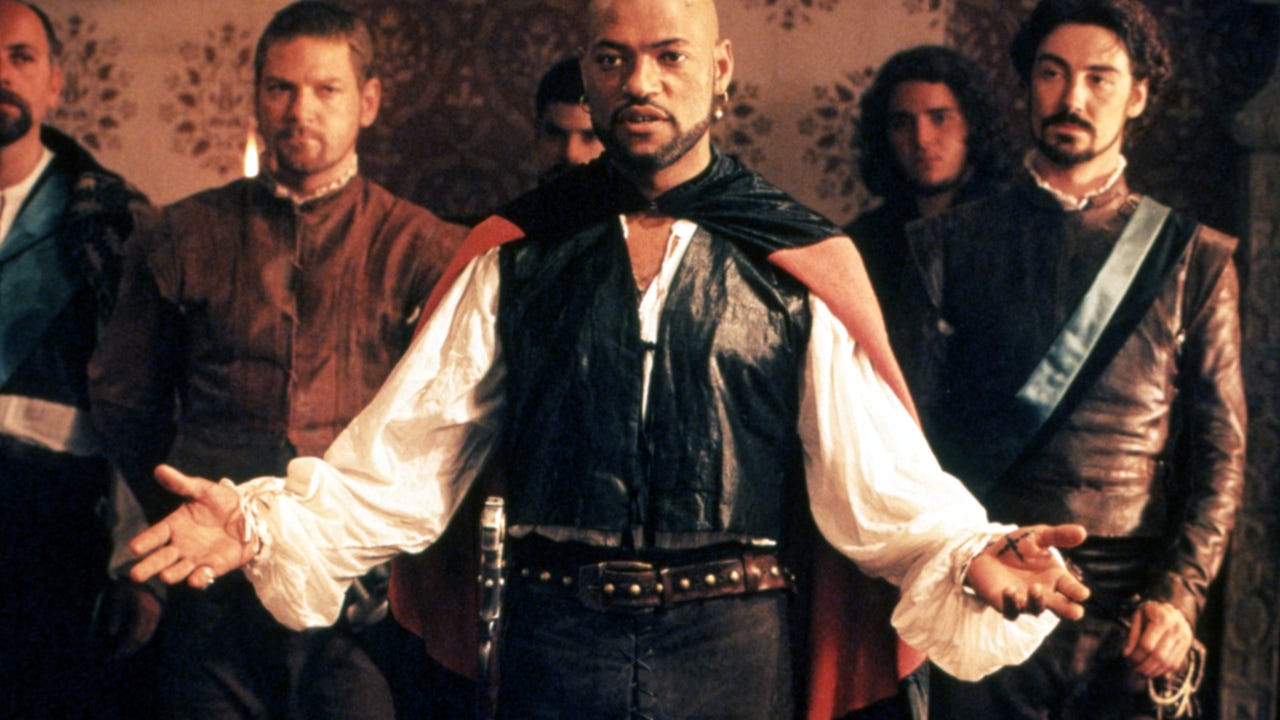
Othello, explaining his love for Desdemona to the Venetian court

The issues at hand - flirting, and allegiance to husband or father - are ones that are near the top of the teenage brain. I probably wouldn't say that about the allegiance to husband or father idea if I were at another Utah school, but so many of our students are from more traditional communities where girls marry younger, and where marriages are arranged to one degree or another. 

So for third period we started with two discussion questions ("No writing right now, just discussing at your tables")

1. How can a man capture a woman's attention and interest? 

and, two minutes later, 

2. Should a woman be more obedient to her father, or her husband? 

For #1, it was great to see how differently the young men and women saw this issue. Men said, make money, drift in nice cars, give compliments. Women said be consistent, have a plan for the future, be respectful, include the woman in decisions. 
Image result for desdemona and brabantio and othello
Desdemona chooses Othello: "But here's my husband."
For #2, many said husband, but many said father, because the husband might not stick around, but the father will always be there. Some articulated that it depends on the relationship with the father, since the daughter may want to get away. 

And, in one of the most interesting moments of the day, L., who moved to the U.S. maybe a year and a half ago, said that the couple can just move, if need be, to another state, to live in peace. I'm so fascinated that she would have understood and sort of taken in this reality of American society, which was likely not a reality in Rwanda: if you don't get along with your family, you can move away from them and start afresh! 

In both 3rd and 4th periods, the discussion of the text which followed ("So, how does Othello get Desdemona's attention?" and "Whom should Desdemona remain close to, her father Brabantio, or her husband Othello?") had much more energy. 

Saturday, September 15, 2018

The Raging Quiet

I have been silent so far today. It's only 6:58, but many waking hours have elapsed, and they have been silent, except for the occasional words spoken aloud, inadvertently, or a sigh or burp or throat clearing. 

Silent companions this morning

I like the publication The Christian Century, and a recent issue focused on Silence. Almost immediately after I began reading some of the articles, I thought about how I can bring a study of silence and its impact into my current text study. What happens during the silences of our book? Choose a moment that is silent, and work out what you think is going on in the minds of the characters. What can silence hold? Is it benign? What different flavors can it contain? Certainly the silences in our story so far have been conspiratorial, wistful, disbelieving, frightened, anxious, resentful, full of animosity, and broken. Students would surely come up with more.


Silence had an interesting appearance in Mrs. Dalloway this morning.

The narrative has taken an abrupt turn in tone since Ms. Woolf shifted her attention from Clarissa and Peter and Richard and their extravagant unhappiness to Septimus and Rezia and their attempts to find help on the path toward peace and comfort, which the doctors Holmes and Bradshaw promise them ludicrously.


Septimus struggles with mental illness, but is told repeatedly that there is "nothing at all the matter" and that he lacks only "a sense of proportion," and needs six months "rest" at a house where the nurses will "teach" him the art (of proportion).


The silences in this book rage with past memories, unspoken turmoils, pressing questions that never pass lips. All is either much contained for the sake of decorum (Woolf seems critical of the British reticence and obligation to control oneself) or contained because the person who might express it feels too despondent to attempt the task. That is Septimus. It seems that trying to make his inner thoughts heard has resulted only in upraidings and absurd advices from the likes of Holmes and Bradshaw. Thus he is listlessly silent.


Rezia, his wife, suffers greatly for his silences, and her own are charged with despair.


These seem very different silences, for Rezia and Septimus, than others described for Peter, Richard and Clarissa. Their silences are in full bloom with the outgrowths of their self-centered dramas. At one lunch with Lady Bruton, Woolf lifts the curtain on the silence:

________

“D’you know who’s in town?” said Lady Bruton suddenly bethinking her. “Our old friend, Peter Walsh.”

They all smiled. Peter Walsh! And Mr. Dalloway was genuinely glad, Milly Brush thought; and Mr. Whitbread thought only of his chicken.

Peter Walsh! All three, Lady Bruton, Hugh Whitbread, and Richard Dalloway, remembered the same thing — how passionately Peter had been in love; been rejected; gone to India; come a cropper; made a mess of things; and Richard Dalloway had a very great liking for the dear old fellow too. Milly Brush saw that; saw a depth in the brown of his eyes; saw him hesitate; consider; which interested her, as Mr. Dalloway always interested her, for what was he thinking, she wondered, about Peter Walsh?

That Peter Walsh had been in love with Clarissa; that he would go back directly after lunch and find Clarissa; that he would tell her, in so many words, that he loved her. Yes, he would say that.


_____

What a thing to think in the silence! How much, and how quickly, raged during this moment of lunch! And I could analyse any of a million silent moments in the classroom and become aware at least of my own raging thoughts and my perceptions of what rages chez mes étudiants. I don't use the word "rage" in an angry way - I want to convey swift and powerful, uncontrollable movement. 

Then, my favorite  - the employee Milly Brush has been watching this silence like a soap opera, it seems, because the narrator tells us: 

_______

Milly Brush once might almost have fallen in love with these silences; 

______

The last silence is one in which a great deal of overt communication takes place. I also engage in this kind of communication in the classroom. I give a lot of thumbs up, a lot of nods, encouraging smiles, discouraging head shakes, and sometimes a wheel my fingers in a circle as in to propel a hampster wheel, by which movement I hope to encourage my students to "say more about that". In this silence, the coffee is hurried along. In the silence left behind the narration, we understand, as we haven't (or at least I didn't) that lunch has drawn out undesirably long. 

___

Mr. Dalloway was always so dependable; such a gentleman too. Now, being forty, Lady Bruton had only to nod, or turn her head a little abruptly, and Milly Brush took the signal, however deeply she might be sunk in these reflections of a detached spirit, of an uncorrupted soul whom life could not bamboozle, because life had not offered her a trinket of the slightest value; not a curl, smile, lip, cheek, nose; nothing whatever; Lady Bruton had only to nod, and Perkins was instructed to quicken the coffee.
______

I love when authors leave silences in the narration when the reader can determine what's going on. Woolf, Hemingway, Colson Whitehead - three writers who immediately come to mind when I think of stories that allow me some latitude to determine unspoken meaning. 

One thing I read this summer about classroom design reminded me that it's important to create spaces for quiet in the classroom. I have been mulling over the idea of a day every two weeks or so during which I could have students move through three stations, one of which would be a silent reading and conferencing-with-me-about-reading station. 

I very much like the idea, because it would be a day without my direct instruction, even for giving instructions, at all, and I have the impression I talk to much to my classes, especially explaining how assignments will work. I drafted some station ideas this morning: 

Station one: In the annex, reading on comfy chairs and having 2-3 min. check-ins with me about reading. 

Station two: On the left side of the classroom, watching a short video related to something we are studying, and reacting to it with your group, your partner, and coming up with questions and comments for a brief, whole class follow-up discussion the following morning. 

Station three: On the right side of the classroom, a Writer's Workshop, where students choose one piece of writing from the past two weeks to edit carefully for spelling and grammar, and then word process. (I need to work on this station, because I know that task will take more than 20 minutes. It could be their job to edit during class, then type on their own time at home or in the library or in my classroom after school.)

These stations would be far from silent, but the teacher megaphone would be turned off for the day, and students would be pursuing their own thoughts. I like the thought.

Monday, September 10, 2018

Why I like writable surfaces

Today groups wrote things they noticed about different elements in a movie we watched on Friday. I like that everyone was A) Moving B) Writing and C) reading what others wrote.

It also allowed me to deal with students who were being difficult. When there is this much movement in the class, there are bound to be some students who are off task. I was dealing with them, while their peers for the most part had their eyes to the wall, focusing on the images and writing. So invariably, when I returned from dealing with a student situation, there were more good things written on the walls. That's so much better than having everyone staring at the student who is wanting attention for acting out anyway.


Saturday, September 8, 2018

The printed Mrs. Dalloway

I have often wished for a dog, so that I could have a reason to get out and walk early in the morning. This morning at 7 I decided to take my library books for a walk so that I could experience the quiet of the city before the sun came over the wasatch. I felt like Virginia Woolf, or her Mrs. Dalloway, observing in details the breaths of the early morning in my neighborhood. There was a rainbow to be observed too.

I'm almost done with the audiobook of Mrs. Dalloway, and last night before I went to bed I felt too stimulated from the week to rest, so I pulled out the printed text and began reading it. 

And it's a completely different experience.  C'est phenomenal - comme quelques phrases qui echapperait mon oreille a l'ecoute se mettent en relief quand je les lis sur la page. Et d'autres, auquelles je n'aurais point entendue sur l'audio, je les lis plusieurs fois car je les trouve si belles.

The story seems even more radical in text, because one can appreciate all the semicolons and the lengthy paragraphs and the lack of chapters. So, a couple of thoughts from last night's reading. 

The book contains so many long passages of musing about the world around us - one gets a front row,  highly annotated view of how a woman, (not always the same woman) sees the world in a moment. Thus a day is drawn out, as we readers are treated to literary versions of physical, visual and emotional sensations. It gives one a great appreciation for the way the body can experience such an exquisite quantity all at once. It takes several minutes to read a full report of what the body will feel in a moment. Indeed, at one point the narrator tells us, after the description of an impression: "All this she saw as one sees a landscape in a flash of lightning." And so it is experienced, in the flesh and soul. What a translation onto the page! How difficult, but by Woolf, how effortlessly wrought. 

Anyway, after these long passages of female reflection, there is sometimes a probing and patronizing comment from a British Man. For example, this recollection of waking on earlier mornings at Bourton: 


Image result for old house french windowsWhat a lark! What a plunge! For so it had always seemed to her, when, with a little squeak of the hinges, which she could hear now, she had burst open the French windows and plunged at Bourton into the open air. How fresh, how calm, stiller than this of course, the air was in the early morning; like the flap of a wave; the kiss of a wave; chill and sharp and yet (for a girl of eighteen as she then was) solemn, feeling as she did, standing there at the open window, that something awful was about to happen; looking at the flowers, at the trees with the smoke winding off them and the rooks rising, falling; standing and looking until Peter Walsh said, “Musing among the vegetables?”

Peter Walsh. Peter Walsh. What a blunt ending to this paragraph is his comment, even his name like a wave, Walshing over the energy and vigor of the emergence of a woman from her French windows, and her subsequent experience of the morning. His question, and others like it in the novel, make me think of a man's uneasiness about a woman's inner life. He offers this comment as a way to minimize the volume of experience he must be able to sense in her, and which makes him uncomfortable. He cannot clearly read what her thoughts or reactions are, and they are therefore dangerously beyond his control. A woman's mind must be wily and worthy of suspicion, he thinks, and so he offers this comment hoping to curtail her mental forays to mere "musings among the vegetables." Surely she will reassure him with a giddy giggle or a docile smile and admit that, yes, she was only observing the simple prettiness (not even beauty! Beauty is too dangerous.) the prettiness of a butterfly. 

Second thought, and not at all related, but this section also jumped out at me because it seemed casually enlightened. Clarissa is aware of her self-seeking (that is, looking for her own self-worth in the perceptions and opinions of others) in a way that most are not, I think. Look at this: 

How much she wanted it — that people should look pleased as she came in, Clarissa thought and turned and walked back towards Bond Street, annoyed, because it was silly to have other reasons for doing things. Much rather would she have been one of those people like Richard who did things for themselves, whereas, she thought, waiting to cross, half the time she did things not simply, not for themselves; but to make people think this or that; perfect idiocy she knew (and now the policeman held up his hand) for no one was ever for a second taken in. 

I love, first of all, that she is walking around town as these reflections float through her head. Nothing like a walk to jostle the thoughts and allow truth to float to the surface, eh? 

I've wondered a great deal in the past few months about how much of what we do is really just a gesture that is meant to "make people think this or that" about us. Even, to make ourselves think this or that. What is it, exactly, to do something just for yourself? Perhaps that is a feeling known only to white British Men like Richard. 


Image result for meryl streep clarissa vaughan flower shopNow, for the next point, there is a connection to be made to Meryl Streep's portrayal of Clarissa Vaughan from The Hours in the movie adaptation (I have not read the book). Near the beginning of the film she goes to buy flowers for her party that evening, and she so beautifully portrays what Mrs. Dalloway describes in the covering up of monstrous emotional turmoil with a physical lunge toward the flowers. There is a lushness to the description of the flower shop, underlain with a desperation that these blooms soften and alleviate whatever these women feel welling up inside of themselves. Here is the passage describing the flower shop, then the passage that caught my attention because of its mention of monsters (my current unit with my students):


There were flowers: delphiniums, sweet peas, bunches of lilac; and carnations, masses of carnations. There were roses; there were irises. Ah yes — so she breathed in the earthy garden sweet smell as she stood talking to Miss Pym who owed her help, and thought her kind, for kind she had been years ago; very kind, but she looked older, this year, turning her head from side to side among the irises and roses and nodding tufts of lilac with her eyes half closed, snuffing in, after the street uproar, the delicious scent, the exquisite coolness. And then, opening her eyes, how fresh like frilled linen clean from a laundry laid in wicker trays the roses looked; and dark and prim the red carnations, holding their heads up; and all the sweet peas spreading in their bowls, tinged violet, snow white, pale — as if it were the evening and girls in muslin frocks came out to pick sweet peas and roses after the superb summer’s day, with its almost blue-black sky, its delphiniums, its carnations, its arum lilies was over; and it was the moment between six and seven when every flower — roses, carnations, irises, lilac — glows; white, violet, red, deep orange; every flower seems to burn by itself, softly, purely in the misty beds; and how she loved the grey-white moths spinning in and out, over the cherry pie, over the evening primroses!


Image result for flower shop

And as she began to go with Miss Pym from jar to jar, choosing, nonsense, nonsense, she said to herself, more and more gently, as if this beauty, this scent, this colour, and Miss Pym liking her, trusting her, were a wave which she let flow over her and surmount that hatred, that monster, surmount it all; and it lifted her up and up when — oh! a pistol shot in the street outside!
Imagine the amount of work involved in bringing together all those blooms. All that life, color, and beauty, in one place, promising the balm which will "surmount that hatred, that monster" but it is all ruined by one pistol shot, which turns out to be nothing but a motor car anyway. The monumental effort required in procuring the solution for our distress is so effortlessly dissolved by the flick of the world's tail, the inadvertent functioning of a world that encroaches on our peace and serenity. That's the impression I get from Mrs. Dalloway and Clarissa Vaughan, at least. 

The last point. Yesterday during lunch my colleague, a man who came to the US in 2010 as a refugee from Rwanda, spoke about having been reprimanded for having asked someone's age. "We don't ask about age!" someone had hissed at him (he didn't say hissed, but I imagine that's what they did). He asked if there were some cultural sensitivity he was unaware of. I expressed my opinion that we are quite afraid of death in our culture - that mortality frightens us, that we like to pretend we are never going to die, so we do whatever we can to preserve and prolong our lives and appearances while we're alive, and we do whatever we can to ensure our legacy after we're gone, with large gravestones, monuments, published works, money for children, houses, philanthropy, names on public buildings... anything to preserve us for posterity. This, I said, is why we don't like to be reminded of or think about our progress toward the end of life. Asking someone's age forces them to recognize that they are not immortal. 

The passage from Mrs. Dalloway which connects with yesterday's exchange at lunch is this one, in which some high ranking official or member of the royal family is passing through the street. The description of the motorcade's effect on the passersby is lengthy and elaborate, but this part addresses the idea of legacy and mortality, I think:


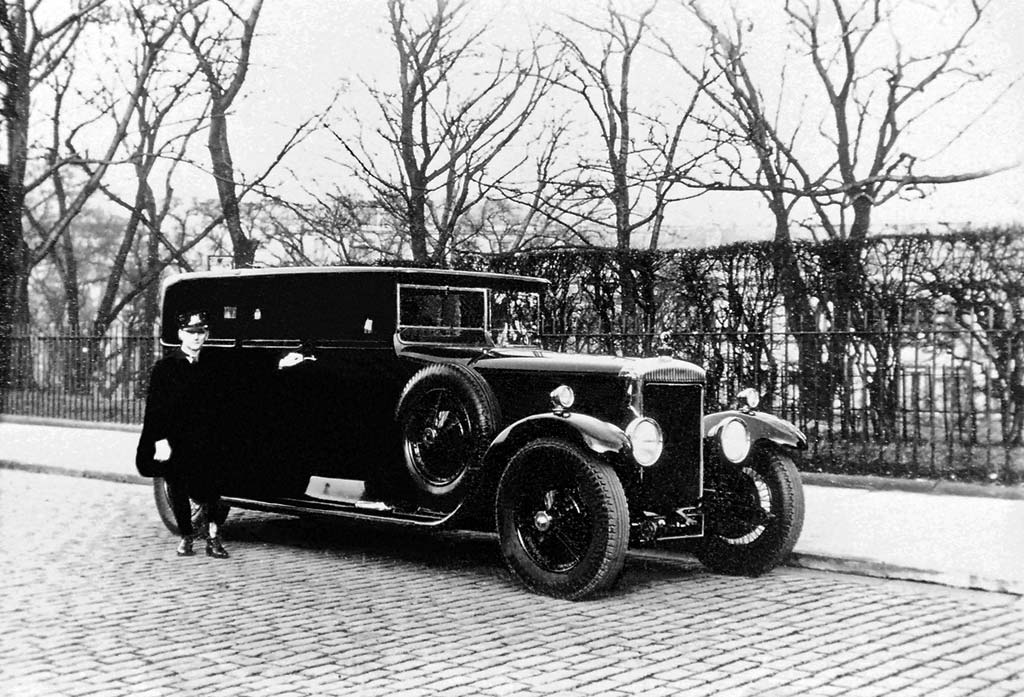
Image result for 1920s black car


The motor car with its blinds drawn and an air of inscrutable reserve proceeded towards Piccadilly, still gazed at, still ruffling the faces on both sides of the street with the same dark breath of veneration whether for Queen, Prince, or Prime Minister nobody knew. The face itself had been seen only once by three people for a few seconds. Even the sex was now in dispute. But there could be no doubt that greatness was seated within; greatness was passing, hidden, down Bond Street, removed only by a hand’s-breadth from ordinary people who might now, for the first and last time, be within speaking distance of the majesty of England, of the enduring symbol of the state which will be known to curious antiquaries, sifting the ruins of time, when London is a grass-grown path and all those hurrying along the pavement this Wednesday morning are but bones with a few wedding rings mixed up in their dust and the gold stoppings of innumerable decayed teeth. The face in the motor car will then be known.

This Wednesday morning is bound to end in nothing but "bones with a few wedding rings mixed up in their dust" - a most exquisitely doleful image - except the worthy and divinely inspired beings within the motorcade - their faces alone of those on the street will be known to "curious antiquaries". It seems to me that Woolf is different from Austen in that she points out the follies of human nature without separating herself from them. Austen seems to point from at least a meter away, and Woolf points as much at herself and her own participation in the absurdities of human thought and error, as at others. 

Monday, September 3, 2018

Mrs. Dalloway

This morning as I began my trajet back from Oakland I looked to see what was on my library e-shelf. Mrs. Dalloway. 

I have only listened up to perhaps a little past noon of Mrs. Dalloway's day as it is presented in the book. And the liberated nature of the narrative is what makes the greatest impression on me. Here is what I wrote at the side of Lake Merritt before leaving Oakland, while I listened to the story: 

How easy it is these days as a privileged white woman to contemplate a life of following one's own heart, trusting one's own instincts, indulging one's own thought patterns and providing sufficient girth for one's romantic and childish thoughts. I am struck as I walk around Lake Merritt on this (marvellously) overcast Labor Day morning, listening to a very good audiobook of Mrs. Dalloway, I am struck with the thought that Virginia Woolf cannot have had many women in the canon before her whose example would have encouraged her to examine every part of a woman's day, of a woman's heart, of a woman's memory. It is exciting to think about being unconventional when one can read this kind of literature and have unconventionality so beautifully articulated, expressed. Who wouldn't want to deviate from society's expectations with such a resplendent image of what deviance can look like, glimmering before one's eyes (ears)? 

The most prominent example of deviation from normally expressed sentiment is the love towards Sally. Below I have cut a long excerpt, but it is too great a passage to curtail. I will comment on each paragraph so as not to seem lazy and as though I'm overquoting.

She sat on the floor — that was her first impression of Sally — she sat on the floor with her arms round her knees, smoking a cigarette. Where could it have been? The Mannings? The Kinloch-Jones’s? At some party (where, she could not be certain), for she had a distinct recollection of saying to the man she was with, “Who is THAT?” And he had told her, and said that Sally’s parents did not get on (how that shocked her — that one’s parents should quarrel!). But all that evening she could not take her eyes off Sally. It was an extraordinary beauty of the kind she most admired, dark, large-eyed, with that quality which, since she hadn’t got it herself, she always envied — a sort of abandonment, as if she could say anything, do anything; a quality much commoner in foreigners than in Englishwomen. Sally always said she had French blood in her veins, an ancestor had been with Marie Antoinette, had his head cut off, left a ruby ring. Perhaps that summer she came to stay at Bourton, walking in quite unexpectedly without a penny in her pocket, one night after dinner, and upsetting poor Aunt Helena to such an extent that she never forgave her. There had been some quarrel at home. She literally hadn’t a penny that night when she came to them — had pawned a brooch to come down. She had rushed off in a passion. They sat up till all hours of the night talking. Sally it was who made her feel, for the first time, how sheltered the life at Bourton was. She knew nothing about sex — nothing about social problems. She had once seen an old man who had dropped dead in a field — she had seen cows just after their calves were born. But Aunt Helena never liked discussion of anything (when Sally gave her William Morris, it had to be wrapped in brown paper). There they sat, hour after hour, talking in her bedroom at the top of the house, talking about life, how they were to reform the world. They meant to found a society to abolish private property, and actually had a letter written, though not sent out. The ideas were Sally’s, of course — but very soon she was just as excited — read Plato in bed before breakfast; read Morris; read Shelley by the hour.

(Mimi: I love how exciting Sally seems, in her role as a woman who is not afraid to do or say what she wants. Especially the first and most telling tendency - to sit on the floor! That does seem radical, and something that would still be remarked upon, even today. I guess that's what endears this passage to me - Sally would be just as compelling today. It wasn't just that she did unusual things, she seemed to exude a newness, and excitement and authenticity that is just as compelling and palpable in people today as it has ever been, set against a backdrop of repression and conformity. The final image I find absolutely intoxicating - the idea of being so excited by the ideas of those around you that you delve into complex texts before breakfast. This is how I felt in Russia, absolutely enthralled in learning everything I could about it, and I would wake early and read all the New Yorker's archived articles on Russia, before peppering breakfast with questions for Judy and Johan.)

Sally’s power was amazing, her gift, her personality. There was her way with flowers, for instance. At Bourton they always had stiff little vases all the way down the table. Sally went out, picked hollyhocks, dahlias — all sorts of flowers that had never been seen together — cut their heads off, and made them swim on the top of water in bowls. The effect was extraordinary — coming in to dinner in the sunset. (Of course Aunt Helena thought it wicked to treat flowers like that.) Then she forgot her sponge, and ran along the passage naked. That grim old housemaid, Ellen Atkins, went about grumbling —“Suppose any of the gentlemen had seen?” Indeed she did shock people. She was untidy, Papa said.

(Mimi: More wonderful images of bucking others' opinions, like cutting flowers into floating heads, and running back to a room, naked, for a sponge.)

The strange thing, on looking back, was the purity, the integrity, of her feeling for Sally. It was not like one’s feeling for a man. It was completely disinterested, and besides, it had a quality which could only exist between women, between women just grown up. It was protective, on her side; sprang from a sense of being in league together, a presentiment of something that was bound to part them (they spoke of marriage always as a catastrophe), which led to this chivalry, this protective feeling which was much more on her side than Sally’s. For in those days she was completely reckless; did the most idiotic things out of bravado; bicycled round the parapet on the terrace; smoked cigars. Absurd, she was — very absurd. But the charm was overpowering, to her at least, so that she could remember standing in her bedroom at the top of the house holding the hot-water can in her hands and saying aloud, “She is beneath this roof. . . . She is beneath this roof!”

(Mimi: Here I am interested in the description of the connection between the women. The "integrity" of the feeling, and especially the idea that the feeling that could only exist between women, which "sprang from the sense of being in league together." That is something indeed rare between a man and a woman. They may be allied, but they are in different leagues, as far as society is concerned. I feel that opposition in my interactions with men and women. No matter how obliging the man is, no matter how separated from any remnant of toxic masculinity - I still feel like we are in opposing leagues. With women, I don't feel that opposition. The other night at a social event I felt relieved when placed in a group of women. We were all in the same league. This morning I felt relieved when my lyft driver to the airport was a woman. We were automatically in the same league. I believe there was a sense of integrity in our interaction precisely because of this same-league status. 

The women who came before did the heavy lifting. Virginia Woolf did some of this lifting, as did Kate Chopin, whom I read earlier this year. Thank goodness that they paved the way and made non-convention seems as tantalizing as it did. Before Mad Men they waged a successful advertising campaign to sell us all, all we modern women, on the delights of bucking the trends.

Monday, August 27, 2018

Writable surfaces, featuring Monsters

I was super intrigued with this post at the blog Cult of Pedagogy (and the accompanying podcast) about how to upgrade classroom spaces. One of the 12 suggestions is to increase the amount of writable surfaces in your classroom. A colleague at NEH this summer said that tables that the kids can write on have made a huge difference in her classroom. Then, this blog post reiterated the idea that getting kids to write on classroom spaces allows them to feel a sense of ownership over the space. I'm also loving that it gets kids out of their seats (my writable surfaces are on the wall) and that it makes visual sharing very easy - we just spend a minute looking around at what others have written, before any discussion takes place.

Today I introduced the theme for this semester, which has been many months in the making: Monsters. We listened to scary music and looked at various images of monsters. Then the kids went "to the board" to brainstorm ideas and associations they have with monsters. These are some of the resulting lists and concept maps:


OK, that was way more difficult than I expected it to be, so I'm not going to comment on them anymore, except to say that the group that wrote "truth" and "apple" and "snake" exceeded my expectations!

Below is a new idea in the making. I read in Penny Kittle's Book Love (one of my teaching Bibles) about writing letters to students about what I'm reading. I've tried it below with the memoir I'm reading right now. They'll look at this on Wednesday, then write me back about what they started reading last week. I'm hoping the letter writing will encourage them to stick with one book.

Friday, August 17, 2018

Where the Quest doesn't have to end

I read a tantalizing blurb about a pilgrimage through Sussex, England undergirded by the reading of Virginia Woolf's To the Lighthouse (which I have never read - in fact I've never read any Woolf, only seen The Hours).


Aside from how much I love the idea of this tour, and how I'm already scanning my acquaintances to determine who might be cajoled into coming on one, I was also grabbed by the last paragraph of the article. The writer refers to a moment in Mrs. Dalloway when an unemployed man stands with a handful of pamphlets before St. Paul's Cathedral, and wonders if he should go in. There is company inside, and a place to belong. He doesn't go in though, and the magazine writer offers this interpretation:

perhaps because he believes it would mean setting down not only his pamphlets but “seeking and questing” as well.

Immediately I wondered, "does stepping into Salt Lake Monthly Meeting involve setting down the Questing and Seeking which draws us there?" The only answer possible is no. There is company, and a place to belong, but there is also seeking and questing inside. Indeed the function of our company is to support each other and create the right environment for collective seeking.

There were three pieces of vocal ministry last week, which felt very promising. I love vocal ministry.


Monday, August 6, 2018

Pride and Prejudice - Granny's favorite

I just found out today that Pride and Prejudice is my grandmother's favorite book. I could not have imagined that the book which already possessed this same position of preeminence in the library of my heart could rise to an even higher stratus, but this fact has done it. 

Image result for pride and prejudice coverI started rereading it on a layover in Newark last week which was supposed to be twenty five minutes and ended up being ten hours. Thank goodness it was preloaded on my kindle. 

There are two passages which stir particular minderings today. 

In one Mary Bennet is described as having hopes that Mr. Collins intends to seek her hand. 

"With proper civilities the ladies then withdrew; all of them equally surprised that he meditated a quick return. Mrs. Bennet wished to understand by it that he thought of paying his addresses to one of her younger girls, and Mary might have been prevailed on to accept him. She rated his abilities much higher than any of the others; there was a solidity in his reflections which often struck her, and though by no means so clever as herself, she thought that if encouraged to read and improve himself by such an example as hers, he might become a very agreeable companion."

Mary recognizes that Collins is not her intellectual equal, but trusts that under her tutelage she may guide him to higher heights. This passage surely precipitates doleful sighs from many readers who have hoped to change a man once they marry him only to find him a recalcitrant pupil. 

Image result for chimamanda ngozi adichie 15 suggestionsIn her fifteen suggestions on how to raise a feminist daughter, Chimamanda Ngozi Adichie warns against the idea of Feminism Lite, which proposes such slogans as "The man is the head of the household, but the woman is the neck," or "The man is the driver, but the woman is in the passenger seat." Such ideas undermine the principal of equality between men and women. 


On Saturday night I attended a wedding in Bar Harbor, Maine where the gods of seating charts placed me next to an English PhD whose dissertation examines feminist ideas in 19th century British literature. I asked her if Feminism Lite makes an appearance in the texts she discusses, especially a 1850 domestic handbook called Household Management. 

Image result for 1850 british domestic guide household managementShe said yes, it does, and while she rejects the ideas in our day and age ("I don't want to be the fucking neck.") she sees that in the 1800's even the idea of being the neck, or holding the map, was pretty radical. 


Mary is this radical. Given so little chance to direct her future, it seems natural that she would dream of molding the mediocre mind of her marital partner. Poor darling; He probably doesn't even register her existence, being first overcome by the traditional tidal waves of beauty and charm in Jane and Elizabeth, then waylaid by the flattering attention of the dogged Charlotte Lucas who "secures" him. 

I cannot decide whether it's a good thing or a pity that Charlotte entertains no hope of altering Mr. Collins' character. Her ready acceptance of him, after all, Elizabeth takes as incontrovertible evidence that Charlotte's own mind is weaker than Elizabeth ever suspected. 

In the second passage Mr. Bennet speaks to his daughter Elizabeth about broken hearts in a manner that reveals the shockingly dull lives of women in this era. 

“So, Lizzy,” said he one day, “your sister is crossed in love, I find. I congratulate her. Next to being married, a girl likes to be crossed a little in love now and then. It is something to think of, and it gives her a sort of distinction among her companions. When is your turn to come? You will hardly bear to be long outdone by Jane. Now is your time. Here are officers enough in Meryton to disappoint all the young ladies in the country. Let Wickham be your man. He is a pleasant fellow, and would jilt you creditably.”

Being crossed in love, he imagines, must be a diversion for a woman whose existence is so limited that she counts on rejection from a man in order to have something to think about and with which to distinguish herself from others of her sex. 

Before I remark on how far women have come since this time, how now accomplished they are in almost every field et cetera, let me offer that Mr. Bennet is not wrong, even in regards to our era. 


What if I had a crush on someone? Would that crush not provide satisfying (if distracting and occasionally torturous) fodder for all kinds of mental machinations, the very kind which provide the subject for much narration in Austen's books? Yes, it would. In fact, it does. And as far as being jilted goes, a large portion of the mental activity which an attachment excites circles around the fear that it will end at the partner's hand, or regret that it already has. As for distinguishing oneself from other women, I think the feelings of having a crush, or having been disappointed in love actually have a double function socially: first, which entails induction into a club of people who have tales of love and its attendant travails (an act of gaining access and inclusion) and second, in describing in detail the ways in which my travails differ from yours (the act of distinction Mr. Bennet imagines.) 

The last paragraph is partially ironic - these three women have plenty to think about,
and yet attractions and jiltings still take up a lot of our thoughts!

Thank goodness we woman have love and partners and rejection to ponder! Else our lives might be very dull indeed. 

What happened on Saturday: Extended worship

Extended Worship came to Portland Friends this weekend. This is a traveling ministry started by two New England Yearly Meeting Friends inter...