 This morning I finished Black Mamba Boy, and am in awe of its geographic reach. A boy born in Yemen who embarks on a journey to find his father after his mother dies. One of the remarkable things about his journey, which starts in 1935, is that anywhere he goes he gives the name of his clan and thus finds people who will take him in, give him work, or at the very least point the way to his next destination. Without the clan network he would certainly never have survived past the first few legs of his journey.
 The book has a map on the inside cover which shows the Arabian peninsula over into northern Europe, divided into the territories and countries that existed in the thirties. I had to refer to it many times, and am also in awe of the vastness and cultural patchwork that characterize those desert regions.
The hardest part of the book to read, but also the most compelling, related to the British and Italian colonial forces in northern Africa at this time - their brutality, their cultural bulldozing, their unrelenting and heavy handed racism. It was tragic to read the young boy's growing self-consciousness of himself as the lowest of the low because he was dark skinned and poor. His treatment at the hands of white soldiers and superiors shames me.
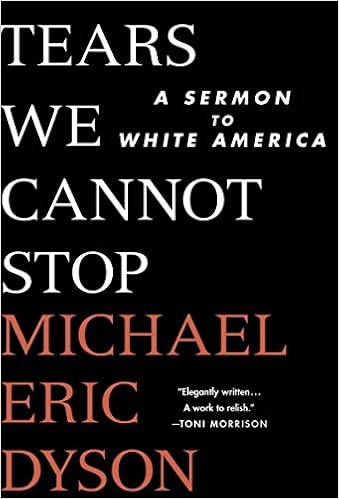 This week I listened to Tears We Cannot Stop: A Sermon to White America. by Michael Eric Dyson, in which he describes briefly his own disillusionment with blackness as he grew up. In the community where he was a boy, he writes, "blackness surrounded me like warm molasses"; as he grew up and encountered more and more of the white narrative about what black people are and where they fit in the hierarchy of life, his own skin color dimmed and that warm molasses effect turned to something decidedly less sweet and rich.
 It never ceases to amaze me how the different things I read converse with each other in my mind. Dyson's account of his own internalization of black-as-bad followed shortly on the heals of my class's analysis of how Othello begins, in acts 3 and 4, to internalize what Iago says about him, namely that his wife made a mistake in marrying him, that his skin color renders their marriage unnatural, and that his status as a foreigner means that his wife is bound to fall out of love with him. I believe much of Othello's madness is driven not by jealousy, but by a nascent self-hatred that he doesn't know what to do with, so unleashes it on the obvious target, which is Desdemona. The class didn't go that far, but we did talk about how he says
"Her name, which was as fresh
As Dian's visage, is not begrimed and black
As mine own face."
We spent a good amount of time talking about how for the first time here, Othello uses the word black to refer to something dirty and ruined, (Desdemona's name or reputation) and his own face.
 On Thursday one class referred to the idea of Monsters again (which is the theme of this unit) and one student said that Othello is not a monster because of the actions he takes - he is a monster because of what he has undergone at the hands of Iago. It was Iago's treatment of him that makes him a monster, and his violent lashings out (slapping his wife - at this point we hadn't seen act five and the murder and suicide) were the reaction of the monster to his treatment. I thought this was incredibly insightful, and we connected to another girl's reference to a black man on the U's campus who had shot his girlfriend, then himself, a few weeks ago. Maybe, we ventured, he had heard too much of what the white people said about him, and couldn't take it once he had internalized it.
The Fire Next Time is my favorite book, and this week I had what felt like a watershed moment as a teacher, as I assigned an excerpt from it to my students. We read Baldwin's opening letter to his nephew, in which he tells the boy that his grandfather "had a terrible life. He was destroyed long before he died because, at the bottom of his heart, he really believed what the white people said about him." Many, many students annotated and commented on this line when they read it, and connected it to what seems to be going on with Othello, along with the line later in the paragraph, which reads "You can only really be destroyed if you believe what the white world says about you."
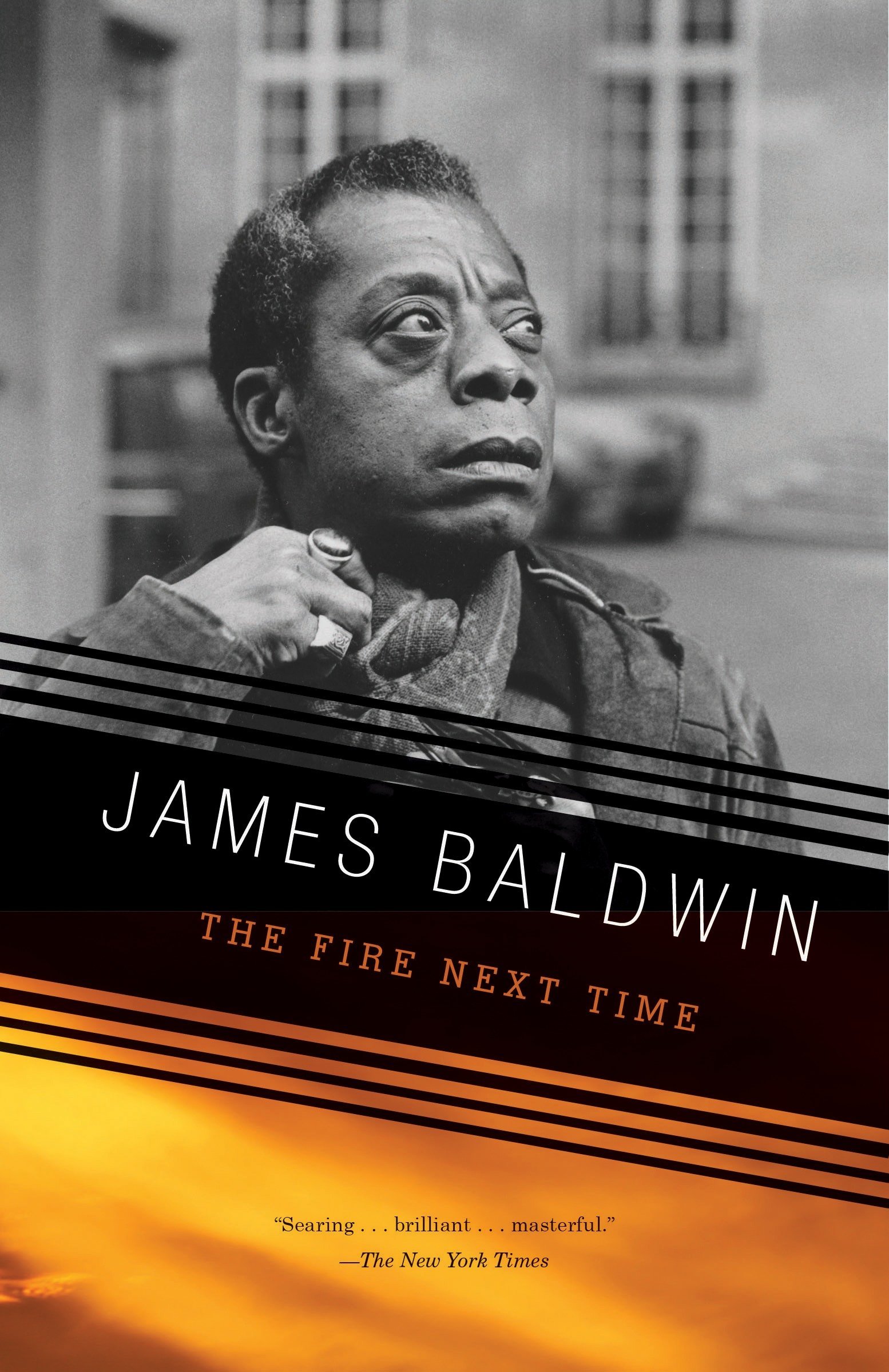 The very next morning, as I was listening to the Dyson audiobook, Dyson referred to exactly that line! He relayed a story at the end of which he reflected, "and I began to understand what James Baldwin meant when he said 'You can only really be destroyed if you believe what the white world says about you.'"
I cannot tell you how gratifying this was. I declared aloud to my living room "I had them read that!" I kind of hope that I get to keep giving them snippets of Baldwin and Malcolm X this year, alongside our readings. I want them to be bathed in the warm molasses of the magnificence of black literary voices.


No comments:
Post a Comment