Sunday, August 25, 2019

A return visit to Capital Church

This morning I went to worship at Capital Church in Salt Lake City. I attended the Saturday night services at Capital when I was in college, and worked on Sunday mornings. It is a new age church as I think of them - Christian rock band, jumbo screen for song lyrics and very well-designed graphics that accompany and enhance pastor Troy's messages, which tend toward 35-40 minutes and are funny, challenging, and firmly based in scripture. 

From the Capital Website


I had many thoughts this morning. 

First, all the hymns emphasized eternal life and triumph over death. "The grave has no power over me," we sang, Suzanne leading us powerfully on stage, in this windowless room that felt like a Christian club on Sunday morning, so different from the traditional (New England) white, windowed sanctuary of First Unitarian Church where I went last week. So what about this eternal life? I just think it's such a strange phenomenon that all of these privileged, mostly white folks, are so determined to overcome death. It seems to bespeak less a triumph over metaphorical death and evil, but a resistance to perfection and mortality.


In the sermon, Troy admonished us to "watch it" with regards to the devil in our lives. This sounds like a traditional, Bible thumping admonition, and in many ways it was, though he tried to couch it in palatable terms. He talked about how hard it is to look at our problems (drinking, lust, and anger are three he spoke about) - how we would rather do anything else. 

This is a trouble I discuss sometimes with spiritual folks interested in the future of religious community. If spiritual life is really going to demand that we look fearlessly within and work on what we find there, it's going to be very unpleasant. What is our commitment mechanism? What will keep us going back to a church where we feel we are asked to look at our deepest fears, at our unwillingness to forgive, at our unwillingness to give up control? 

Troy did not answer this difficult question, and continued only to tell us that we need to "watch it" on our own. He didn't speak at all of the role that community plays in helping us be vigilant against negative patterns, or in dealing with them once they're here. Actually, that's not true. One of his homework assignments (the homework assigned after the closing hymn is one of Troy's trademarks, and I think it's excellent) was to seek input about the issue on your mind (drinking, lust, anger) from someone who loves you and loves God. 

This, I think, should have gotten some explication during the sermon. How do you find people like that? How do you create spiritual relationships? That's the trick, and too often church's aren't the place where people are willing to become vulnerable. And this was my problem with Troy's sermon. He spoke of things like anger, depression, lust... as things that you need to be 100% free of. 

Unrealistic. 

An admonition to do whatever you have to do to keep the devil away from you, to make sure the devil never comes near you, can only promote a blustery refusal to admit one's constant dance with darkness. Life is dealing with the dark thoughts that come up - anger, lust, greed, fear. But "dealing with" is different from "resisting" or, worse, "denying place". I feel many probably left Capital Church today determined once and for all to resist their human impulses toward anger and lust, on their own. Given how hard that is, I anticipate they might then feel significant shame that they could not do what Troy told them was necessary: they couldn't "watch it" enough to be safe from the thoughts that are built into the human psyche. 

During the music part of the worship service, ushers guided late-comers to the empty seats (by the end of the 15-minute music session, there were probably 500 people in the room). These men, young, fit, tall, attractive, white, glad-handed each other, shaking hands with the people at the ends of rows, grasping each others' shoulders, slapping each other congenially, and then requesting that worshippers move up to make room for more worshippers. It was a show of Christian male congeniality and general Christ-like perfection. These men were successfully "watching it," far from sin and safe from the devil. They smelled too good for the devil to be close to them. This ritual made me question whether Capital, and most church communities, are the kind of setting in which people might become an intimate community ready to sit with problems and seek God's guidance. 

Troy spoke a great deal about Richard Beck's idea of "spiritual warfare." The term rankles, as does any metaphor used in the legacy of Christ (the pacifist) which compares spiritual practice to violence. The idea of being at war with one's demons is finally one I have started to amend in my own thinking. I used to think of my character defects, such as fear, selfishness and anger, as things against which I needed to maintain constant vigilance, and which I needed to strike down decisively as soon as they reared their heads. Recent study has changed my opinion on this point. 


Image result for dragonsTara Brach has a podcast episode called From Dragons to Schmoos: Meeting life with Compassionate Presence in which she talks about disarming your negative thought patterns by simply accepting them. Well, accepting them for the time being. The idea is to say, "Hello, anger, I see you. I see you and I know you are there for a reason. Let's have tea together. Let's talk about why you are so fired up. You don't have to go anywhere, just know that I am aware of you. Let's talk." 

This compassionate opening of space is what takes the ferocity out of the attack. How can something remain terrifying in the face of an invitation to tea? If I look at the parts of me that cause trouble, and label them bad, and try to distance myself from them, do I not give them a great deal of power? What if I accepted them entirely, without qualification, and invited them to tea? 

Tara Brach's talk also doesn't talk about the role of spiritual community in facing these dragons. Talking through things with someone who loves me and loves God seems to me an essential step toward reducing their power over me. I just wish our community were better at fostering that kind of community. 

Saturday, July 6, 2019

What happens between the invasions

When we tell our own stories, and especially when we tell the stories of countries or empires, it is easy to use the big, sometimes catastrophic events as the only reference points. "I moved here, lost this job, moved here, divorced, got sick, this person died, then I moved here. And here I am!" Or, with a history lesson about a country, "Iran was part of the Persian empire, then was invaded by the Ottomans, and then the Mongols..." (I don't actually know if that order is correct). 

I went to a talk last night on Iran, and the presenter made some reference to the culture of Iran between the invasions that dominate its timeline. I much appreciated this. It made me think of how fiction illuminates the small dramas that give substance and animism to our lives. And not only that, but they highlight the dynamism of our inner lives - how we think, obsess, decide, ponder, worry, etc. 

So this video gives a sense of contemporary Iranian history, using the timeline approach (I love John Green)

       
And this movie gives a sense of one family's drama. 


I also read about this musical, which, while telling no story, reveals such an important part of the human experience by revealing some of our common neuroses. I am especially interested that the characters on stage in addition to the protagonist are the voices in his brain. From the review: 

the only other characters in the show are Usher’s “Thoughts,” six hilarious, hyper-verbal, endlessly cruel archetypical shape-shifters. One moment, they’re abstract entities—self-loathing, sexual ambivalence, financial mishandling.

Thank goodness for art for showing us what goes on between the invasions and wars.

Wednesday, July 3, 2019

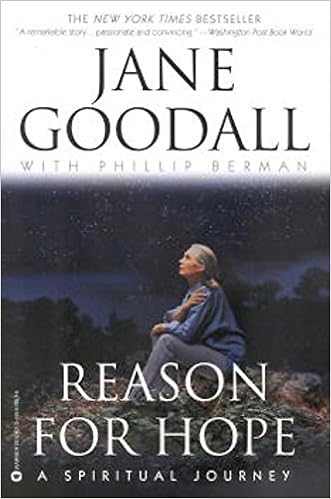
Jane Goodall, Reason for Hope

Jane Goodall's memoir, Reason for Hope, took a surprising and distressing turn yesterday. She describes how, after ten years of observing the chimpanzees at the Gombe Stream Research Center, she and the other researchers began observing brutally aggressive behavior in the chimps. 

Image result for jane goodall reason for hopeSome of the adult males began beating up adult females with infants. They would often kill the infant. They would beat up the female. She often died of her injuries. Women also attacked other females, and even ate their babies. When one community broke into two groups at opposite ends of the reserve, one group continually attacked individual members of the other group while they were alone, until the breakaway troupe was all but annihilated. 

Goodall found these events difficult not only because she knew these animals well and it was hard to see them turn on each other in such violence, but also because of the implications of these observations on their understanding of chimp nature. She was encouraged not to publish her findings, since publication would certainly provide fodder for scientists eager to justify human violence by claiming it was inherent in our genetic nature, inherited from our ape-like ancestors. 

She published anyway, and this did in fact come to pass. Chimpanzees had a dark side to their nature, which illuminated some aspects of our own dark nature. 

It is interesting to consider for oneself, quite free of scientific research, whether one thinks humans are naturally peaceful or naturally aggressive and hateful. I would say no, first off, but really there is overwhelming evidence on both sides of the argument. Children offer gifts and love freely and naturally. They also divide into factions and work for others' destruction. Adults do love each other, and especially their own children. They also create many artificial ways of separating themselves from others and justifying violence toward the "other" groups. 

The chimps Goodall observed behaved not just to protect themselves, but to inflict major pain and suffering on each other. Does that mean this is what we will naturally do, after a time? 

Marianne Williamson says "When people behave unlovingly, they have forgotten who they are." Is this what happened to the chimps? Our amnesia can be quite powerful, as induced by fear and socialization. I think it pretty conceivable that we can be "asleep at the wheel" and act in ways not in tune with our true nature. I hope that is where our violence comes from, not from our innate hatred of the other.

Here's a little video summary of the section I listened to yesterday. 


I take comfort in the fact that I'm only half way through the book, and the title is Reason for Hope, so there must be a compelling uplift from this depressing revelation about chimps - that they can be just as vicious as we can. 

Tuesday, July 2, 2019

Perfectibility and perfectionism

How badly should I feel about falling short of the mark? And what is the mark?

The other day I read a prayer offered at the end of a piece published in Quaker Life magazine. Here it is:

God,
I'm sorry. I'm sorry for being so hard. For being graceless, merciless. Please, forgive me. Open my heart, my mind, and my sight. May I see people in their realness, sit with them and love them in their realness. Please help me as I try to be better tomorrow.
Amen.

The Kennebec river, visible through the woods


There are parts of the prayer I find excellent ("May I see people in their realness, sit with them and love them in their realness") but the opening distresses me. I don't like the idea that if I fall short of perfection, I need to apologize about being "so hard". I am human, and imperfect by that nature, and so allow me to strive for the ideals (loving people in their realness) without having to say sorry. Let me ask for divine help and guidance ("help me to...") without asking for forgiveness for falling short of the mark.

L. says that in Jewish tradition, humans are in the world to perfect it. The purpose of human life is to perfect the imperfect world that the almighty intentionally gave to us. It is understood that we will never fully achieve perfection, never fully succeed at the task. Each day, though, is spent in the attempt, and incremental steps toward perfection are acknowledged.

This sounds so much more useful to me than a mentality where I'm supposed to bring about perfectibility but actually expected to achieve it (which, to me, the apology in the prayer implies. Why would I apologize if I didn't expect to successfully achieve perfection?)

Let's say I wake up and pray for the ability to be the perfect, Christ-like teacher one school day. The day continues, and I respond with patience and tolerance in many situations, and also respond brashly and unkindly in a few others. I make some people feel badly, even if I don't realize it. When I do realize it, I apologize, but some damage has been done. I learn about my own tendencies, and at the end of the day I think I know myself and my way of relating to others better. I realize where I might behave differently tomorrow. In my prayer at the end of the day, let me say not "I'm sorry," but "Thank you for the lessons of today." Let the prayer be

God,
You taught me many things today. Thank you for the opportunity to be of service to others, and to be enriched by my interactions with them. Help me use the lessons from today to improve my interactions with others tomorrow. Help me see where you are leading me. 
Amen.

My problem with the apology for imperfection is that it makes self-compassion hard, and I think self-compassion is already hard enough. When I fall short of the mark, I am often tempted to reprimand myself. I speak in terms that no one else would use with me if they expected to be my friend. I am harsher on myself than I would be on others.

This area has a way of achieving perfection every moment.

What if, encountering our own imperfections we said, instead of "I'm sorry I'm so hard[-headed]" "Of course. Of course I'm so hard headed. I'm human and that's what humans are. I am dealing with my own demons and struggles which prevent me from being perfect. Thank you, self, for your attempts to make it through space and time safely and feeling OK. Let's try to rely more on God's power and less on our own control tomorrow."

How we talk to ourselves matters so much. The simple switch from "I'm sorry for being this way" to "Of course I'm this way - good for me for working daily to improve" could lead to quite the evolution in how we relate to ourselves and the world. 

Monday, July 1, 2019

Stand still, and act not

The query read at the start of Meeting yesterday morning was not officially a query, but a quote from James Naylor.

Art thou in darkness? Mind it not, for if thou dost it will feed thee more. But stand still, and act not, and wait in patience, till Light arises out of Darkness and leads thee.

I was also glad that we heard this in the Paulette Meier plain song chant.


During the silence I thought about what this darkness could consist of. I think it's anything in your life that feels like gunk; where one feels stuck. And it is uncomfortable, and feels counter-intuitive, to stand still in the gunk. But waiting there is what is counselled, instead of buzzing around. This implies that we are powerless over the gunk, that if we try to escape it on our own we will only spin our wheels in the mire.

A thought for today is to have the courage to stand still in the gunk and know that light will arise to lead us out of that darkness.

Sunday, June 30, 2019

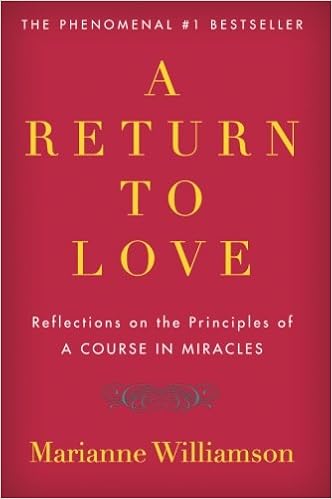
A Return to Love, and Maine

Quaker House
It was a magical thing to wake up in Maine today. I am staying at Quaker House, an intentional community in Bath, on the Kennebec River, whose waters, alternately shimmering and dull in the partly cloudy morning, I can see from my bedroom window.

Is it sentimentality alone which makes it such a pleasure to see the mossy trees and fences, and feel the absurd amount of water in the air? (Luckily my hair is so short right now it can't really curl.)


On Friday, the night before I arrived here, my hosts watched The Late Show with Stephen Colbert, which I have never seen. I have seen on clip of Colbert back on the Colbert Report, which I thought was funny - I don't remember the topic.

Love Thy Neighbor - very easy on this tiny, quiet road.

Because I don't read the news (or listen to it or watch it) I didn't know that the democratic debate had happened on Thursday. I also didn't know that Marianne Williamson was a candidate. I only learned her name a few weeks ago when a friend recommended her book A Return to Love.


I tried to hold Colbert's belittling comments about Williamson and her faith in the power of love at bay since I wanted to read her book without the taint of political satire (exactly none of which satire I found funny that night).


I started A Return to Love last night, and immediately was engaged by Williamson's description of how we see ourselves.

One idea I find fascinating in spirituality is that we are intent on experiencing the positive changes that a spiritual life promises, without giving up any of the patterns of thinking and acting upon which we presently rely. This, spiritual tradition tells us, is futile. We must give up all old ideas, relinquish ourselves entirely to the control of an outside being, forfeit all our previous ways of being, and embrace something foreign.

Image result for mere christianity cover
I first encountered this idea in Mere Christianity by C.S. Lewis. Lewis says that people become unduly anxious about having to relinquish their vices as they adopt a Christian lifestyle. They need not worry, because Christianity does not require that they cram their current selves into a straighter straight jacket - their entire current self will be subsumed in the new entity that God will create with them. From the text of Mere Christianity:

“Christ says, 'Give me All. I don't want so much of your time and so much of your money and so much of your work: I want You. I have not come to torment your natural self, but to kill it. No half-measures are any good...Hand over the whole natural self, all the desires which you think innocent as well as the ones you think wicked--the whole outfit. I will give you a new self instead. In fact, I will give you Myself: my own will shall become yours.'"

No half-measures are any good? That seems dramatic. I have never been able to commit wholly to a spiritual way of life. All my measures are half. I have never surrendered every aspect of my life to God's care. That sounds terrifying to me. My natural self is alive and kicking - perhaps kicking away Christ's suggestions of a fuller commitment to God's care. Actually, even that is inaccurate based on Lewis's ideas: Christ doesn't want a "fuller" commitment; any level of commitment short of the fully monty is futile. 

But indeed I have not found this to be so. I think commitment on a grand scale is the ideal - an ideal I will work towards my whole life, but I do not expect my natural self to die unto God before it dies unto the world. Perhaps not either afterward, who says my spirit is any less headstrong and wilful than my human body? 

Marianne Williamson also touches on the topic of surrender in her first chapter. She describes the "grandiose" moment when she invited God into her life. 

Image result for a return to love book"I had thought that things would improve. It's as though my life was a house, and I thought God would give it a wonderful paint job -- new shutters perhaps, a pretty portico, new roof. Instead, it felt as though, as soon as I have the house to God, He hit it with a giant wrecking ball. 'Sorry, honey," He seemed to say, "There were cracks in the foundation, not to mention all the rats in the bedroom. I thought we better just start all over.'"


Starting all over with a new foundation - what does that look like? The first cornerstone I would like to jettison is the social expectations society places on women. Actually, since this is about rebuilding my house, not society's, I suppose the stone to remove is the one that contains my desire to adhere to society's expectations. 

Still, though, reading this passage I hear myself ask (in a whiney tone) "Can't I put some supports in place and renovate without tearing the whole thing down?" Can't I let spirituality into my life without dying? The paradox is that we seek spirituality because we acknowledge, at some level, that we are not happy - that our lives are not what we want them to be. But really I just want to add some pleasant bells and whistles without removing any of the parts of myself that I am comfortable with, even if they are detrimental and cause pain.

One more return: I will attend unprogrammed worship at Durham Friends today. 

Wednesday, May 22, 2019

Born a Crime

Image result for cover born a crimeI've just started listening to Trevor Noah's Born a Crime on audio, which is read by him. It's a book that's been on my radar for a long time -- well, since the middle of last year when a very bright and capable Somali young man came into my classroom carrying it, ready to read it for independent reading.


Sidenote about moments like this. It is difficult to watch high school boys (and girls, but generally it's easier to connect girls with literature they like) try out books that are the right kind of story, the right tone, the right content, the right kind of author, for them, but they don't speak English well enough for the story to float. This is what happened with R. and Ta-Nahisi Coates' Between the World and Me and with A. and Born a Crime. They are 100% ready to read this content, but don't have the reading skills in English. Maybe they don't have the reading skills in their own language either - they simply haven't been reading long enough to be prepared for text at their emotional maturity level. Listening to Noah's anecdotes, there are not that many turns of phrase and difficult vocabulary words, but there are definitely enough to throw off a new reader.

I just finished the chapter where Noah describes how he grew up in a world of women. Women ran the household the town, his life, his school... and he came to respect their leadership and authority. He also says this was no accident - that young, black South Africans were systematically separated from their fathers, who left to work in factories or mines, and in service jobs for white South Africans.

By the end of the first chapter Noah had proven himself a talented storyteller. He combines the poignant with the humorous to great effect - we are drawn in by his story, and educated by his details about Apartheid South Africa.

He describes his mother in remarkable terms - a woman who persisted in pursuing the things she wanted, despite many arrests and the constant threat of violence and death. One of his earliest anecdotes (the word "anecdote" hardly seems to have the capacity to hold this story's significance) describes how she shoved him out of a moving renegade taxi whose driver had implied that he meant to kill her and her children. Noah was 9 years old, and he and his mother barrelled out of the moving minibus, along with a baby brother, protected by the mother's body, and ran like the dickens away from the drivers in hot pursuit.

This story reminded me of the stories of several of my students, which rarely featured fathers, but quite often featured mothers doing feats of remarkable bravery and resistance. I don't know what to make of it. How can I explain the seemingly superhuman courage and perseverance of mothers in desperate times? There must be research on this.

OK, I just found some. This Smithsonian Magazine article includes an interview with a researcher whose research has shown that mother rats are smarter in many ways than non-mother rats. Here's an excerpt which makes me think of Noah's story, and of the stories of my students, describing how their mothers faced daunting situations coolly and fearlessly.

Mothers are less stressed out when you put them in a stress-inducing situation. They don’t show as much fear. They are more efficient at foraging. They will find food, collect it quickly and get back. They are more aggressive at defending their offspring; if there is an intruder or any sort of threatening presence, moms will fight it more than non-mothers. A recent study showed that moms are better at recognizing emotions than others. Mothers are able to recognize hostility, disgust, fear or the types of emotions that would trigger some sort of danger to their offspring.
This paragraph also helps to explain the attitude of Sharon Rivers, mother of Tish rivers and advocate for Fonny Hunt, in If Beale Street Could Talk. This week we have looked at the scene in which Sharon goes to Puerto Rico to trace the woman who has accused Fonny of rape. Sharon needs to find her, befriend her, and convince her to return to New York and change her testimony in court. A monumental task.

Sharon, arriving in Puerto Rico.
But Sharon takes it on with grace and self-possession. How do women do this? Would a man take on that task? I feel most would not. I think part of a woman's genius is that she is not afraid of what failure will do to her image, or self-image. A certain familiarity with humiliation emboldens her to act despite the possibility of failure.

One of my main goals as a teacher is to reduce the perceived risk of failure in the classroom. Today a student tried to express a complicated idea in class, and had to backtrack several times to correct what she was saying. Two other students gave sighs and sounds of exasperation as she paused and restarted for the third time. I spoke to them about how having to pause and consider what you're saying is not a sign of failure, it's a sign that what you're piecing together is worth expressing, because it's complicated. I always wonder at the efficacy of such statements. Can kids process that? Could I have, at 17? Probably. But I could understand every word a teacher was saying.

This particular student, by the way, has a very impressive mother, and is herself on her way to fearless, inspiring womanhood. I am so lucky to get to spend my days with these students.

Sunday, May 5, 2019

Norma and Dido, strong women

Utah Opera's current production of Norma features a strong women. Not only does this pagan priestess of the Druids' war god interpret and deliver the military strategy to the Druid generals and waiting warriors, she rings the gong that sends men into battle!

Image result for utah opera norma
As the opera smokes towards a climax, it becomes clear that Norma is delivering war strategy based on her feelings towards her flame, a general in the attacking Roman army, and that she pays precious little attention to the war god. When she and Pollione are on good terms, peace reigns. When he ticks her off, "Roman blood shall run in the rivers". 

Bellini created this role at a time, 19th century, when Western Europe became newly interested in ancient societies like the Druids. The program notes tell us: "England and Wales experienced a new fascination with the Druids and ancient societies that held national and cultural pride." Many of these societies, it turns out, did have matriarchal power structures, although the Druids was not one. "The notion of a formidable sacred feminine figure supports an emerging 19th century belief that many pre-historic societies were, in fact, matriarchies." And what an intriguing idea that would have been for those societies. 

I liked the opera's drama between the priestess and her acolyte, Adalgisa. These two women have an interesting series of movements toward and away from intimacy with one another, which I felt very compelled by, since it was devoid of the rather pathetic romance that characterizes that same dance between the romantic leads of any opera. Between the women it was clear they wanted attachment and meaningful relationship, but didn't know when to trust, when to strike out boldly alone, when to rely on another. 

The other strong woman on my mind this weekend is Dido. One might assume she came to mind after Norma because both women fling themselves upon a flaming funeral pyre our of love for a warrior husband... but no, I hadn't made that connection at all until just a few moments ago. 
The story actually begins at Office Depot. When I went to Office Depot to get some printing done for school, the song "Clocks" by Coldplay came on. It had been a long, long time since I'd heard Coldplay. I resolved to listen to a lot of Coldplay this weekend (a resolution which I kept, at the peril of my phone battery yesterday and ability to call a Lyft to get home from the opera). 

Coldplay brings me back to high school, so this afternoon I decided to listen to another artist I listened to incessantly in high school - Dido. Particularly, the album "Life for Rent". 

In one song, "Don't Leave Home", the speaker speaks tenderly to a lover in a way that also sets off all kinds of red flags - this woman is a controller. 


Look at the chorus, where she promises: 

If you're cold I'll keep you warm
If you're low just hold on
Cause I will be your safety

But then in the last line, forebodingly counsels, 

Oh don't leave home

She knows her spell is potent immediately - that she has ensnared her prey right away: 

When I've been here for just one day
You'll already miss me if I go away
So close the blinds and shut the door
You won't need other friends anymore
Oh don't leave home, oh don't leave home

As the song goes she gets more candid about how she intends to use her power - it's as if she knows her object, by this point, couldn't extract themselves if they wanted to.

I arrived when you were weak
I'll make you weaker, like a child
Now all your love you give to me
When your heart is all I need
Oh don't leave home, oh don't leave home

The "quiet" of the last verse is haunting. The quiet of having shut every other person out of the object's life. Friends are gone, no one is there to witness and stop the "bad romance" as Lady Gaga (another powerful woman) would say.

Image result for dido life for rent album cover
Oh how quiet, quiet the world can be
When it's just you and little me
Everything is clear and everything is new
So you won't be leaving will you


The "little" before "me" is taunting-  as if you needn't be afraid of course, since I'm just this "little" thing ...that has now taken over your life. 

Strong women, Dido, Norma, and others, are frightening. Would the world really be better if women were in charge? Maybe after a while, once all the resentment of past ills done us were handled in some kind of massive, collective 12-step inspired process...

Monday, February 18, 2019

The Public, and Public Space

View from U of U library reading room
My colleague who teaches eleventh and twelfth grade US history and civics posts her units' essential questions on her door, which is centrally located such that every member of the school community passes it at least a few times a day. The current questions are 

- How do we move toward justice as a society, and once we have it, how do we keep it?

- Who has a right to public spaces?

These questions (the first a large, overarching one for the year, the second specific to the current unit of civil rights) are accompanied by pictures of "colored seating area" and "we wash for whites only" signs of our overtly segregated past. 

What about public space in our city? Where is it? Who has a right to it? 

I am currently sitting in the University of Utah's library which has a stunning westerly view of the Oquirrh mountain range. As an alum, I am eligible for a Pass which allows me to take books out of this library, and to sign up for a 2 hour internet pass. The man at the info desk told me "This will expire in two and a half hours at 12:22; we give you an extra half hour in case you want to go to the bathroom or get a drink or something." I'm sure my gratitude showed on my face. 

Free Fare Zone MapMy point is that this beautiful space, which I can treat as public, is not. Everyone on my bus ride up here was white, and everyone had a transit pass (no one was paying with cash or change for a ticket) which means that everyone was probably a university student: all students receive an unlimited transit pass. We were all well-heeled and toting academic-looking backpacks. 

Contrast this with my ride down state street the other day, on the 200 bus which ferries lots of down and out folks from point A to B. Wheelchairs, strollers, trash bags of possessions, scruffy beards, dirty hair and hats... these elements of the more representative public of this city were all in evidence on the ride. 

Photo of Salt Lake Roasting Co. at Library Square - Salt Lake City, UT, United StatesDo the two populations on these routes ever share another public space in the city? At the public library they certainly do. That's why the SL Roasting that's  nestled in the first floor of the library is my favorite coffee shop in the city - it is frequented by people of every echelon and color our city has. 

Perhaps the bus's free-fare zone is also a public space, but one to which the stigma of being called "free" is attached. Something that should have a price attached is now being offered free, conveying all the patronizing pity of presents donated at Christmas or food labelled "Not to be Sold" (which Malcolm X recalls having received after his father left his mom with 7 kids to feed - 'It's a wonder we didn't come to think of it as a brand' he says.) 

True public space is rare in our society. I remember this past summer feeling like every square inch of New York City, where I would expect to find robust public space, seemed monetized. Or, at least that my presence there was more legitimate if I had an expensive coffee in my hand, or was somehow supporting capitalism. I know this is not true - for example I spent time walking on the Highline; roaming Prospect Park; listening to free concerts in Brooklyn, sitting on a bench in Washington Square Park; sitting beside the East River with friends; enjoying free chamber music at a cathedral near Wall Street. 

I guess there was just an intensity there that I could not feel at home in. I wanted to retreat to the Quaker boarding house where I was staying, where each person seemed an equally legitimate member of the community. 

This short article from the New Yorker discusses how services like Uber and Lyft are diminishing commuters' understanding of public space by selling the myth that they are the only passengers on the road: Nikil Saval evokes the image of the map that shows your driver approaching - the only thing on the road, devoid of other humans, or any indication of public life and space. 

Indeed, when I watch that little car come toward my pick-up location, I am often confounded about what could possibly be taking so long - there is clearly nothing in your path obstructing the way! Just zoom on over here! Once in the car, I am hardly more aware of what's going on outside - since I don't have the responsibility of driving, I read a book or am on my phone, or even gaze out the window without really seeing what I'm looking at.

I feel the same way when waiting for the bus, and watching its icon approach at a painstakingly slow rate on the iRide app (which I have many times contemplated taking off my phone, so irritating is the process of watching the bus approach but never. seem. to. arrive.) Once on the bus, I cannot tune out public space - it is surrounding me. The bus pulls up to a curb and noisily lowers down. A mother with a stroller and two toddlers rolls laboriously on, Smiths shopping bags dangling precariously from handles and tiny hands. 

Or a older, large, motorized chair rider requires the ramp to be flipped out onto the uneven, icy shoulder. Perhaps a wheelchair needs to be strapped into place by the driver. All the while, frustrated cars turn on blinkers and rashly dash around the bus, undoubtedly cursing the obstruction the public transit poses to their travel. 

On these buses I never resent the inefficiency of public transit - how could one, when confronted with the difficulties of manoeuvring in this world without lots of money and perfect health? 

I like that I get to treat the public transit system and the University library as public - I have a transit pass through my work, and the Pass for alums to this library. I don't have to pay a price to be seen in my city. I wish this were the case for more folks. 

Gloria Steinem spends a good part of the last chapter of her memoir talking about the Native women that she has spent time with, organized with, and learned from. I learned that the Iroquois Confederacy, not ancient Greece, was the model for the US constitution, because the framers could see how well the Confederacy's governing philosophy worked for them. Apparently when the two Iroquois delegates arrived in the meeting hall in Philadelphia, their first question was "Where are the women?"

What struck me about her comments about Native governance - well, many things struck me, but this is relevant here - was that each member of the society was seen and considered relevant, legitimate in the public eye. I have a lot more learning to do about Native life and philosophy, this book showed me.

Saturday, February 16, 2019

Daniel, Cornel West, and small movements for justice

Gloria Steinem's memoir is instructive in its structure. She zooms in on several of the populations she has worked with to fight for justice, or the communities that she has entered for long enough to get a sense of their own desire for justice. Two of these are

- Women flight attendants demanding fair treatment and reduction of status as sexual symbols
- Conservative women who picket against Planned Parenthood because 1% of its services are related to safe abortions, who then come in for abortions themselves before returning with renewed vitriol (fuelled by guilt?) to the picket line.

She tells her own story and the story of the women's movement in this country around and through these stories of isolated, small-ish scale movements for justice. In these communities people who what they want, and are able to band together at least a little bit to demand it. And it works. And they are inspired by things they read or hear about similar stirrings in other places.

We are indeed so inspired by words we hear from one another. I have been inspired this week by the prophetic and insightful words of my students in role play and discussion. I have been inspired by their poetry. I have been inspired by Steinem's example of living a life not rooted to one place or idea or possession (or possessions in general) but "on the road" in spirit if not in physical reality.

I have been inspired by the combined glory given to both arts and political activism in some things I'm reading recently.

1. Warmth of Other Suns, which has loads of epigraphs citing songs and novels by black and non-black writers and artists about the struggle for freedom and what living as a black American has meant to them. Here are two from the beginning of the book.

I was leaving the South 
To fling myself into the unknown....
I was taking a part of the South
To transplant in alien soil,
To see if it could grow differently,
If it could drink of new and cool rains,
Bend in strange winds, 
Respond to the warmth of other suns
And, perhaps to bloom.

        - Richard Wright


Our mattresses were made 
of corn shucks
and soft gray Spanish moss
that hung from the trees....
From the swamps 
we got soup turtles
and baby alligators
and from the woods
we got raccoon,
rabbit and possum.

        -Mahalia Jackson, Movin' On Up

I appreciate how Wilkerson pays credence to the power of the arts, especially music, in encapsulating and expressing struggles and triumphs - I should just say the human condition.

2. Cornel West's speech at U of Washington in 2014, which I watched on youtube. I have never seen him speak before and my goodness what power. A theme throughout was the important of taking inspiration from musicians and the musical world both in our ability to harmonize, improvise, experiment, and sing the truth of the situation, in order to constantly raise the level of the collective art we are engaged in making.


3. If Beale Street Could Talk, which has allusions to music throughout. The most moving recently was a reference to Daniel, a character who is incarcerated for two years and thoroughly traumatized by his experiences inside. The narrator of the book asks '"Didn't my lord deliver Daniel? Then why not every man?" It's an old question, and still unanswered.'

This prompted me to stop my audiobook and begin singing that amazing spiritual "Didn't my lord deliver Daniel?" I found this beautifully directed and performed version which I share with you now.


___

On a separate note, I have heard the name of Quakerism, the legacy of Quakerism, invoked by a solid handful of high profile folks in the past few weeks in ways that have made me uncomfortable. People speak of write about the valiance of Quakers fighting against slavery. Do we live up to this legacy today? I have to remember that John Woolman was not just searching and courageous in his journal - he was in his public life too. I cannot read about injustice and then continue with life as normal. I must organize. As Cornel West says - he answered the ubiquitous audience question of "how can I as a normal working person help?" by saying "You've got to take out time to organize, through whatever organization you have available to you." Indeed we must.


Wednesday, February 6, 2019

Cosy Sheridan, Gloria Steinem and the wisdom of women

Snowday
The director of my choir is a force to be reckoned with. A talented leader, he is also harsh, fairly aloof to most of us, and sometimes domineering. I don't think I would ever choose to be in the same room with him were it not for a choir rehearsal. But for rehearsals, he is unbeatable. We, a ragtag community choir, rise to great heights under his hand keeping the beat, and his voice, alternately counting and critiquing. 

On the weeks when he is not there, the assistant director, Kerrin, leads rehearsal. I know I am not alone in my disappointment when I walk in and Kerrin is on the stage. (They never tell us when Brady will be out of town, because they probably know we wouldn't come to rehearsal.) 

Kerrin is a talented and knowledgeable musician, and a capable director. The only person who seems to doubt this is Kerrin herself. Therefore her leadership is somewhat painful to undergo, because she is constantly apologizing and undercutting her own ability. 
"I'm sorry, I'm sorry for not being clear." 
"Did you get lost there? Maybe it's just me that gets lost." (She doesn't get lost.) 
"Good! Goodgoodgoodgoodgood." (When we haven't done well at all, but she seems afraid to be anything but positive.) 

The sopranos talk constantly through her rehearsals, something they never do with Brady. We go much, much more slowly through the music, and she asks "Did anything stick out in there? Should we go over it again?" When all we want is someone to tell us where to start and what to work on. It can be disheartening when the leader doesn't assume the role of leader thoroughly enough. 

I think about this in relation to the classroom. I do ask for student input and reflection often. Sometimes I'll ask for their help on small things like how we should rearrange into a circle. Should we go around these two tables? Should we move the tables to the corners? This seems minor, and maybe it is. But I want them to know I value their ability to problem solve in a context when their contribution is relevant. If I'm deciding how to lead a part of my English lesson, I'm less likely to ask their opinion, since it's my job, and ostensibly my area of expertise, to know how to lead the lesson, and I don't think they would have a better idea than I would, about whether to share in groups of 2 or 3, or whether to write for five minutes before talking through their ideas. Maybe they would. 

But I wish Kerrin would be more confident in her role as director when she is up there. Last night, she said we needed to cut off on time at a certain place, because she wasn't going to be able to cue everyone at that moment. "I'm only human, unfortunately," she said. This made me want to cry. Everything about how she presents reveals that she truly, truly believes, as many women do, that it is unfortunate that they are only human. When society tells them to be so much more, they are disappointed and ashamed to find they have (in the words of Othello's Emilia:) "Affections, desires for sport, and frailties, as men have". I want to call out to Kerrin - it's OK to have frailties! We all have frailties! And that is what makes life interesting! And (in the words of Hugh Grant's character in Two Weeks Notice:) "Saints are boring!"

On Friday Mum and I went to February's IAMA concert, featuring Mountain Country, and Cosy Sheridan. Mountain Country is a five piece country band, four men and a woman on standing bass, that played all original music. It was typically sexist in its messages: a woman is "a good thing" something "nice to come home to" that "smells good". The male speaker in the songs is "hard to hold onto" and a "rambler." 

I would have been more willing to forgive these as the conventions of the genre were it not for the fact that at the end of the set the lead singer and guitar player introduced each musician by name - except the woman playing bass. You could feel the cocked heads and raised eye brows in the UU audience until another band member acknowledged her, and an overwhelming whoop and applause went up from all corners of the room. "She always gets the loudest applause." the leader griped into the microphone. "It's because she's the cutest," quipped the banjo player. 

No, my dears. It is not because she's the cutest. It's because of what we can tell she has to put up with. 
Image result for gloria steinem my life on the road


The "rambling" song especially made me think of the memoir by Gloria Steinem that I'm listening to on audio right now, subtitled My Life on the Road. Steinem describes how when she was young, all images of women were associated with home and hearth, and the men were the ones to go gallivanting off. She has bucked that trend by spending more than half of the past 40 years on the road, organizing, mobilizing, speaking, being a feminist activist. 

I am greatly inspired by her commitment to listening, and being part of consensus circles that meet with "all five senses". Think about what that means. 
- Sight - we can all see each other
- Smell - we are close enough to smell each other and the aroma of the ...
- Taste - ...food we are eating together.
- Hear - we are close enough that we can hear without microphones or phones.
- Touch - our chairs are close enough that we had to jostle each other to get into the circle, and we are not afraid to touch each others legs or hands as we pass the talking piece around. 

This reminds me of circle time in advisory, when two student leaders come up with two questions to ask each other, and we discuss them in pairs then come into a circle to talk about them. 

Being part of an audience has always seemed sadly distant from the idea Gloria Steinem describes. I wish that at a concert or a talk there was more sense of being part of a listening circle among audience members. 

Image result for cosy sheridan images
Cosy Sheridan
The second set on Friday night was by Cosy Sheridan, and I felt us approach the ideal of audience unity under her influence. The first sign was that, after the song "The Pomegranate Seed" a woman two rows ahead of me waited until the applause died and exclaimed "That was beautiful!" She spoke the "sense of the room" as Quakers would put it. The next sign that we as an audience had been transformed by her performance was when she said "We'll play one more for you," and a man on the other side of the sanctuary asked with unguarded sincerity, completely devoid of jest or self-deprecation, "Can you just play for another hour?" He too spoke to desire on all of our hearts. I can't remember the last time I was at a concert where I wished the performance would go on for another hour. 


What made Cosy so compelling? Mom said it - "She's a real folk artist." I believe we were drawn to the universal images of humanness that we, like Kerrin, are taught to despise in ourselves and hide from the world. She spoke of her desire to build a fence between herself and her neighbors, feelings of shame before a mother, the desire to be healthy combined with distaste for healthy things, the difficulty of finding fulfilling work and liking the life we've made, and the challenge of feeling OK about having less money than we associate with mainstream "success". She conveyed these ideas with warmth and humor and harmony, a sure-fire way to get them to sink home immediately. 

The last time I was in an audience that seemed linked to the same degree was listening to Colson Whitehead speak at the SLC Public Library, where he lifted his iPad to the microphone in order to convey the crackly sound of a 1960's song, which he mouthed the words to until we were all singing along (well, all the people who had been conscious for the original broadcasting of the song - I had never heard it before). We were united in song, something I'm sure none of us expected when we arrived at the auditorium and promptly ignored everyone around us, even in the very next seat. There were spontaneous spurts of laughter during this song, which I think revealed the degree to which people were taken out of themselves by this turn of events. 

Today is a snow day, my first since high school, I think. The phenomenon has lost none of its magic!

Saturday, January 26, 2019

"So many stories"

Yesterday after school, a newly arrived student, B, met with me to read together his homework. He writes in his home language, Thai, and then uses google translate to change it to English. Each time we meet, I am amazed at the capabilities of Google Translate at this point. This week, he gave his ideas on Langston Hughes' "The Negro Speaks of Rivers" and "I, Too". 

Then, I asked him to show me on the map where he is from. Thus ensued a half-hour continuation of our conversation in which B taught me more about Thailand than I ever have known. For example, that its tenth king died two years ago. He was the longest serving king in the world, and the oldest, at 89. The country mourned for one year. B spoke these things into his phone in Thai, then showed me the translation on the screen. He also showed me the folk tales of his native land, in images, and I found this one in an English retelling on the blog of a Thai-German young woman. 
I am reminded by these kinds of conversations of the vastness of my students' lives. B said "I know so much in Thai", and "In Thai, I learn so fast." He is learning very quickly here too, and I can only imagine how much more quickly he would progress in his own language, on topics of his choice. 

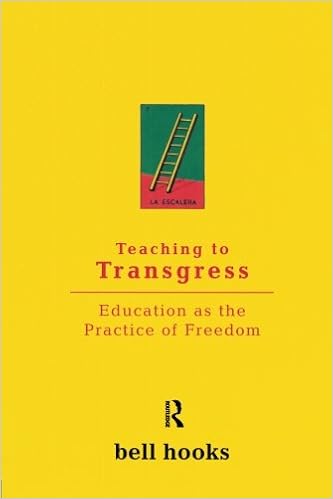
bell hooks says that student stories are essential to bring into the classroom. It is essential to acknowledge the parts of them that are not directly related to school. I wish that school could leave the boundaries of the classroom more often. I would like to experience the world with my students more - the other week students in my advisory asked what class we would like to add to the classes offered at school. I said, one where we explore the city together, and see what we find. It's true. 

Friday, January 18, 2019

bell hooks, ways of knowing, and being a white teacher

bell hooks reflects, in one of her essays in Teaching to Transgress, that if she had been able to take classes on critical race theory from progressive black professors rather than her progressive white professors, she would have, because those teachers, by dint of being black, would deliver the information differently because of the "spirit that orders the words" when they speak. There is a legitimacy, of course, that comes from being a minority, which changes the way students perceive content that is delivered to them. 

I feel my own lack of legitimacy in this area as a white teacher when we consider thoughtful texts by black authors in my class. Yesterday we discussed Audre Lorde's "Poetry is Not a Luxury" and even though she speaks of women, not of black women or white women, I felt a certain gulf between myself and my students as I spoke with them about how Lorde exhorts us: 

"We must constantly encourage ourselves and each other to attempt the heretical actions our dreams imply and some of our old ideas disparage." 


A white teacher telling the students that we need to encourage each other feels a bit empty, frankly. I just imagine what these black students would feel if it were a black woman, or a black man, or a fellow refugee, speaking to them about the need to encourage each other. Of course I encourage them daily, but it's within a fairly proscribed academic context. I encourage them about their jobs and their sports pursuits, but I cannot pretend that we are really part of the same community, and they know it. 

Image result for teaching to transgress coverWhat I felt very passionately, though I did not make this distinction in more than one class, is that as students they need to encourage each other. As friends, they need to encourage each other to look within, to face their fears, to "bear the intimacy of scrutiny, and to flourish within in," so we can "learn to use the products of that scrutiny for power within our living," which causes "those fears which rule our lives and form our silences [to] begin to lose their meaning."

hooks talks about the importance of individual experience in the classroom as a legitimate way of knowing, especially the experience of oppressed groups, like women and minorities. I feel much better about my ability to create a space in the classroom for the sharing of this kind of experience, as a white female teacher. Still, listening to her makes me want to be a principal just so I can search out and hire teachers of color, which our system so desperately needs. 

Yesterday many of the young women in my class (and many men as well, in fact) knocked my socks off with their comments about the essay. Only maybe 30-40% of the students in each class spoke during our 15-20 minute circle discussion, but the things that were shared were thoughtful and, I trust, impacted the thinking of everyone in the room. 

In perhaps my favorite moment all day, MN asked, "Miss, what does she mean by 'poetry is the skeleton architecture of our lives'?" I was unsure what to say, because indeed that phrase flummoxed me each of the half dozen times I read and annotated this essay in preparation for class. Luckily, MA jumped in with a response before I even could pose the question to the class - and she very rarely does that! She said "It means it's the most important thing. It's the thing that all our other action depends on." I was astounded by the ease and clarity of her interpretation. Of course, that makes perfect sense and is a powerful vision of poetry, and totally in line with Lorde's thrust in this essay, that poetry is not a luxury. Neither, I said to the class, is our literal skeleton a luxury - "We would fall down without it" mused SH. MN jumped onto MA's comment - "Ah, so she's saying we need to look inside ourselves to find it!" Again, this deepened my own understanding of Lorde's concept of poetry as skeleton.


In the first period, the conversation focused on fear and the ways it keeps us silent. Lorde's comment about how fears keep us silent and that, by putting them under "scrutiny" we can begin to be free of them, spurred a conversation of what kinds of fears make us silent. 
Fear of actually facing violence, said ZE.
Fear of facing incarceration if we are guilty, said DI.
Fear of people's reactions if we tell them we are sick, like if we have HIV, said AM.
Fear of being abused, or of telling someone that we've been abused, said MY.
Fear of angry parents if we tell them that we are in a relationship, said AA.  

Before we read Lorde's words about encouraging each other, I asked students how we overcome these fears. They said "raise your voice; be confident" and I said that those things are hard. How do we gain the confidence to raise our voice? Practice, they said, and encourage each other. This is exactly what Lorde tells us, I said. We looked at the section where Lorde says that "We can train ourselves to respect our feelings, and to discipline (transpose) them into a language that matches those feelings so they can be shared. And where the language does not yet exist, it is our poetry which helps to fashion it." 

Image result for audre lorde poetry is not a luxuryWe had just written poetry at the beginning of class, a stanza of lines all of which began with "I". When we reached this point in the discussion, we could say "That was training. Lorde would congratulate us here on doing the hard work of looking within and asking 'What and who am I?'" We then talked, in both first and second periods, about what that takes courage. Why is it hard to turn the spotlight towards ourselves? 
Because sometimes we've made mistakes and done things we don't want to look at, said MN.
Because we like to put the past in the past, and pretend it has no power, said ZA.

_________

At the beginning of the period, as I told the classes that their homework was to read two poems by Langston Hughes, I said that it was his poetry was caused me to like poetry. "I didn't like any of the poetry we read in high school," I told them, to which RA said "Me neither!" I thought this was great, I always love the candor of what RA says. So I said "I'm so glad you said that, because it reminds me to say to you, even if you don't like any of the poetry we are reading now, don't give up on poetry, because there are a million kinds, and you might connect really well to some other kind of poetry. Don't do what I did, which is graduate thinking 'aw, poetry is just not for me.'"

I was going to make a comparison to what people have told me about beer - "you just haven't found the right one yet!" But I didn't. 

I've been thinking what kind of academic writing I could do about what goes on in my classroom, and I feel like reflecting on being a white teacher in a classroom of African and Asian and South American students might be fruitful line of inquiry to pursue.


Sunday, January 13, 2019

Life as a lesson block

I have taken to thinking of my days as lessons. In the classroom, each lesson begins with reading. When I have the lesson properly planned out, it ends with writing of some kind. Reading and writing bookend the more active and interactive work that goes on.

Part of me thinks, if this is a beneficial structure for class, why not adopt it in life? And indeed I do write in the mornings, and read at night. On weekends, I am lucky enough to be able to read and write in the mornings, and read and write at nights. It's the life.

The other aspect of lessons is that, after something large or substantive, like a hands-on activity, video making, discussion, or video viewing, I think it's important to allow students to write down their thoughts, as a way of processing what they've just experienced.

I want to practice that practice right now, after having finished The Handmaid's Tale by Margaret Atwood. I liked the ending. An academic conference in the future, at which two professors discuss their research into the authenticity of the document known to the audience as The Handmaid's Tale. How easily all our troubles and dramas will be glossed by a future academic conference. The intensity of my emotion, the realness of my experience, cannot hope to be re-felt, re-captured, by future generations, caught up as they will be in their own time and narratives.

The most horrifying part of the book seemed to be that old women are sent to the "colonies" to clean up toxic waste, offered no protection, and so die after a short time on the job. This injustice against older women revealed to me how strongly I respect and admire women of that age. I am much angrier at the injustices against them than against the Wives and Handmaids and Marthas.

Image result for margaret atwood new yorker
Margaret Atwood
The book also says interesting things about covert activity, and how human nature will not be contained. Everyone in the story has something that he or she is hiding, and even though the consequences are dire, they do the hidden activity anyway. Life along the oh-so straight and narrow just isn't really an option, it seems. And some of us will die for the risks we take to experience just a little bit of life.

Atwood says in an essay in the New York Times that she leaves the narrator unnamed because so many people have passed through history, storytellers who have left us their tales, unnamed and unacknowledged. They have been heroes, and we will never know who they are. Most of them, in fact, their stories will never be told. Offred was one of them. We are the lucky audience of readers, one day to become writers, who benefit from the fact that they, who like Offred maybe didn't want to tell their stories, did.


What happened on Saturday: Extended worship

Extended Worship came to Portland Friends this weekend. This is a traveling ministry started by two New England Yearly Meeting Friends inter...