I just found out today that Pride and Prejudice is my grandmother's favorite book. I could not have imagined that the book which already possessed this same position of preeminence in the library of my heart could rise to an even higher stratus, but this fact has done it.
 I started rereading it on a layover in Newark last week which was supposed to be twenty five minutes and ended up being ten hours. Thank goodness it was preloaded on my kindle.
There are two passages which stir particular minderings today.
In one Mary Bennet is described as having hopes that Mr. Collins intends to seek her hand.
"With proper civilities the ladies then withdrew; all of them equally surprised that he meditated a quick return. Mrs. Bennet wished to understand by it that he thought of paying his addresses to one of her younger girls, and Mary might have been prevailed on to accept him. She rated his abilities much higher than any of the others; there was a solidity in his reflections which often struck her, and though by no means so clever as herself, she thought that if encouraged to read and improve himself by such an example as hers, he might become a very agreeable companion."
Mary recognizes that Collins is not her intellectual equal, but trusts that under her tutelage she may guide him to higher heights. This passage surely precipitates doleful sighs from many readers who have hoped to change a man once they marry him only to find him a recalcitrant pupil.
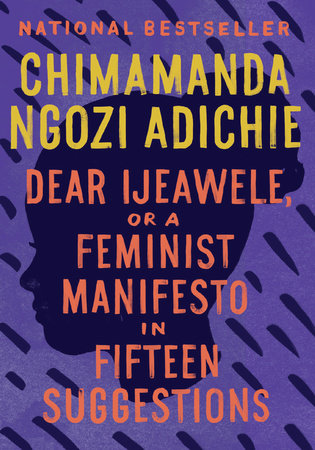 In her fifteen suggestions on how to raise a feminist daughter, Chimamanda Ngozi Adichie warns against the idea of Feminism Lite, which proposes such slogans as "The man is the head of the household, but the woman is the neck," or "The man is the driver, but the woman is in the passenger seat." Such ideas undermine the principal of equality between men and women.
 On Saturday night I attended a wedding in Bar Harbor, Maine where the gods of seating charts placed me next to an English PhD whose dissertation examines feminist ideas in 19th century British literature. I asked her if Feminism Lite makes an appearance in the texts she discusses, especially a 1850 domestic handbook called Household Management.
 She said yes, it does, and while she rejects the ideas in our day and age ("I don't want to be the fucking neck.") she sees that in the 1800's even the idea of being the neck, or holding the map, was pretty radical.
Mary is this radical. Given so little chance to direct her future, it seems natural that she would dream of molding the mediocre mind of her marital partner. Poor darling; He probably doesn't even register her existence, being first overcome by the traditional tidal waves of beauty and charm in Jane and Elizabeth, then waylaid by the flattering attention of the dogged Charlotte Lucas who "secures" him.
I cannot decide whether it's a good thing or a pity that Charlotte entertains no hope of altering Mr. Collins' character. Her ready acceptance of him, after all, Elizabeth takes as incontrovertible evidence that Charlotte's own mind is weaker than Elizabeth ever suspected.
In the second passage Mr. Bennet speaks to his daughter Elizabeth about broken hearts in a manner that reveals the shockingly dull lives of women in this era.
Being crossed in love, he imagines, must be a diversion for a woman whose existence is so limited that she counts on rejection from a man in order to have something to think about and with which to distinguish herself from others of her sex.
Before I remark on how far women have come since this time, how now accomplished they are in almost every field et cetera, let me offer that Mr. Bennet is not wrong, even in regards to our era.
What if I had a crush on someone? Would that crush not provide satisfying (if distracting and occasionally torturous) fodder for all kinds of mental machinations, the very kind which provide the subject for much narration in Austen's books? Yes, it would. In fact, it does. And as far as being jilted goes, a large portion of the mental activity which an attachment excites circles around the fear that it will end at the partner's hand, or regret that it already has. As for distinguishing oneself from other women, I think the feelings of having a crush, or having been disappointed in love actually have a double function socially: first, which entails induction into a club of people who have tales of love and its attendant travails (an act of gaining access and inclusion) and second, in describing in detail the ways in which my travails differ from yours (the act of distinction Mr. Bennet imagines.)
 |
| The last paragraph is partially ironic - these three women have plenty to think about, and yet attractions and jiltings still take up a lot of our thoughts! |
Thank goodness we woman have love and partners and rejection to ponder! Else our lives might be very dull indeed.


No comments:
Post a Comment