This post's first thread of experience, soon to be woven in with another: Today I visited the Young Single Adult (YSA) ward that a colleague attends. While there is lots of sharing of personal messages, or testimonies, at LDS meetings, there is not a sermon or specific take-home message, so this afternoon I still felt as though I was in need of a Sunday Sermon.
 Second thread: Last night I watched Guess Who's Coming to Dinner for the first time; or rather I watched most of it. By 10:20 I felt like I knew how it was going to end, and was no longer interested. I was also distressed by the way the movie was treating race. The main character Joey falls in love with a black man 14 years her senior while on holiday in Hawaii. Both are smitten, and decide to get married.
They return to San Francisco, to Joey's parents' house, and break the news of their shocking engagement. The parents struggle theatrically with the race of Doctor Prentice. The black man is exceptionally accomplished, but he's black. Sidney Poitier plays the good Doctor, who keeps apologizing for being "the problem" in what I found to be the most unrealistic and unconvincing portrayal of a black fiance.
After viewing, and especially upon waking up, I wanted to know what James Baldwin would say about the film. I remembered that Poitier had been mentioned in I am Not Your Negro, and wanted to read more about Baldwin's impressions of white cinema's use of this black man.
He wrote a book-length essay, it turns out, called "The Devil Finds Work" about race and cinema, including comments on Poitier's career. I couldn't find it in PDF form, so I've requested it from the library.
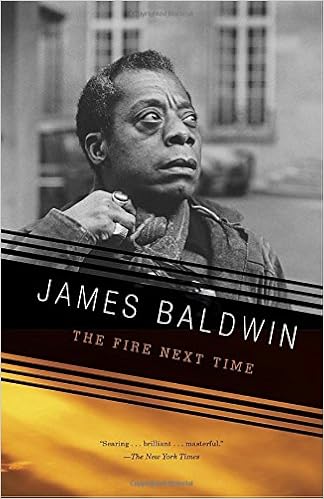
In lieu of reading that document, I found a youtube audiobook of The Fire Next Time, my favorite Baldwin text, and have been listening to it while I've made this tomato fennel soup, which is now my favorite tomato soup recipe, probably because of the quantity of butter into which the onion and fennel are melted in the first stage.
Fire has much to say on themes that Guess Who's Coming brings up. For example, John, the Doctor, is portrayed as someone who seeks acceptance into white society, and seeks to be called "successful" along the lines white people have established. This is what Baldwin has to say:
"There appears to be a vast amount of confusion on this point, but I do not know many Negroes who are eager to be 'accepted' by white people, still less to be loved by them; they, the blacks, simply don't wish to be beaten over the head by the whites every instant of our brief passage on this planet."
In the letter to his nephew which opens the novel, Baldwin is more pointed:
"There is no reason for you to try to become like white people and there is no basis whatever for their assumption that they must accept you. The really terrible thing, old buddy, is that you must accept them. And I mean that very seriously. You must accept them and accept them with love."
This is not what Guess Who's Coming implies needs to happen. The whole plot is predicated on the idea that the white world needs to accept John, even though it would be perfectly reasonable to say "that's just too much to ask!" as Joey's father does for most of the film. John, sadly, is as convinced of this as the rest of the cast.
Which alludes to another of Baldwin's points: the crime of this country is that it teaches the black man that he is depraved. In that same letter to his nephew, he writes "You can only be destroyed by believing that you really are what the white world calls a nigger."
A few pages later:
"This innocent country set you down in a ghetto in which, in fact, it intended that you should perish...
You were born where you were born and faced the future that you faced because you were born black and for no other reason...
You were born into a society which spelled out with brutal clarity, and in as many ways as possible, that you were a worthless human being."
 Joanna says that she doesn't see what difference race will make. John says she loves him because she doesn't see a difference between him and herself. This is just naivete, to think that black people and white people inhabit the same world in America (especially in 1967, but also today). Again, Baldwin speaks to this:
Second thread: Last night I watched Guess Who's Coming to Dinner for the first time; or rather I watched most of it. By 10:20 I felt like I knew how it was going to end, and was no longer interested. I was also distressed by the way the movie was treating race. The main character Joey falls in love with a black man 14 years her senior while on holiday in Hawaii. Both are smitten, and decide to get married.They return to San Francisco, to Joey's parents' house, and break the news of their shocking engagement. The parents struggle theatrically with the race of Doctor Prentice. The black man is exceptionally accomplished, but he's black. Sidney Poitier plays the good Doctor, who keeps apologizing for being "the problem" in what I found to be the most unrealistic and unconvincing portrayal of a black fiance.
After viewing, and especially upon waking up, I wanted to know what James Baldwin would say about the film. I remembered that Poitier had been mentioned in I am Not Your Negro, and wanted to read more about Baldwin's impressions of white cinema's use of this black man.
He wrote a book-length essay, it turns out, called "The Devil Finds Work" about race and cinema, including comments on Poitier's career. I couldn't find it in PDF form, so I've requested it from the library.
In lieu of reading that document, I found a youtube audiobook of The Fire Next Time, my favorite Baldwin text, and have been listening to it while I've made this tomato fennel soup, which is now my favorite tomato soup recipe, probably because of the quantity of butter into which the onion and fennel are melted in the first stage.
Fire has much to say on themes that Guess Who's Coming brings up. For example, John, the Doctor, is portrayed as someone who seeks acceptance into white society, and seeks to be called "successful" along the lines white people have established. This is what Baldwin has to say:
"There appears to be a vast amount of confusion on this point, but I do not know many Negroes who are eager to be 'accepted' by white people, still less to be loved by them; they, the blacks, simply don't wish to be beaten over the head by the whites every instant of our brief passage on this planet."
In the letter to his nephew which opens the novel, Baldwin is more pointed:
"There is no reason for you to try to become like white people and there is no basis whatever for their assumption that they must accept you. The really terrible thing, old buddy, is that you must accept them. And I mean that very seriously. You must accept them and accept them with love."
This is not what Guess Who's Coming implies needs to happen. The whole plot is predicated on the idea that the white world needs to accept John, even though it would be perfectly reasonable to say "that's just too much to ask!" as Joey's father does for most of the film. John, sadly, is as convinced of this as the rest of the cast.
Which alludes to another of Baldwin's points: the crime of this country is that it teaches the black man that he is depraved. In that same letter to his nephew, he writes "You can only be destroyed by believing that you really are what the white world calls a nigger."
A few pages later:
"This innocent country set you down in a ghetto in which, in fact, it intended that you should perish...
You were born where you were born and faced the future that you faced because you were born black and for no other reason...
You were born into a society which spelled out with brutal clarity, and in as many ways as possible, that you were a worthless human being."
In Guess, the cook/maid, a woman of color, is furious at John for attempting to rise above his station. She has fully internalized the low expectations that the country laid before her. Even though he has exceeded those expectations, John seems to have internalized the same inferiority complex.
Joanna says that she doesn't see what difference race will make. John says she loves him because she doesn't see a difference between him and herself. This is just naivete, to think that black people and white people inhabit the same world in America (especially in 1967, but also today). Again, Baldwin speaks to this:
Now, my dear namesake, these innocent and well-meaning people, your countrymen, have caused you to be born under conditions not very far removed from those described for us by Charles Dickens in the London of more than a hundred years ago. (I hear the chorus of the innocents screaming, "No! This is not true! How bitter you are!" -- but I am writing this letter to you, to try to tell you something about how to handle them, for most of them do not yet really know that you exist."
The last line, "most of them do not yet really know that you exist," describes exactly what I see happening in the movie. Joey doesn't really see John. Neither do her parents. They also don't see their maid. I'm not sure what they're seeing. But it is not the full human.
When I turned to James Baldwin looking for a more exacting and demanding lesson than I got at church this morning, I turned to the right place. Listen to this last though, given in the part of the book where Baldwin describes his own introduction to Christianity:
As he grew up and learned more about the way things worked, it became clear that "Neither civilized reason nor Christian love would cause any of those people to treat you as they presumably wanted to be treated; only the fear of your power to retaliate would cause them to do that." Here is the crux of the violence issue: Did white America respect the black man as he was? No, and the lesson for this young Baldwin was that unless he had a lever, a trigger, he would not be treated as these Christians themselves wanted to be treated.
Violence seemed the only answer. In the Judges text we looked at in Sunday School today, violence also seemed to be the only answer. War, my friend pointed out, was an act of preservation. Even as a Quaker I see the appeal and necessity of violence in some areas. Pacifism seems untenable when one side is so intransigently obtuse or abusive, or both. But look at how Baldwin responded to injustice: Writing unbelievably eloquent and love-based books for the American public, whom he must have believed deserved another, and another, chance. That is an act of love.


No comments:
Post a Comment